
There is something deeply satisfying about walking away from a shopping trip with a beautifully crafted dress or a polished silhouette-defining coat at a fraction of its original price. When you know how to shop end season fashion sales with intention and strategy, your wardrobe transforms without your bank account suffering. The challenge most women face is not a lack of desire. It is a lack of a system. This guide gives you that system, covering exactly when sales hit their sweetest discounts, how to prepare before you click or browse, and how to verify you are getting a genuine deal worth celebrating. ✨
Table of Contents
- Key takeaways
- How to shop end season fashion sales strategically
- Building your pre-sale shopping checklist
- Executing your sale shopping in-store and online
- Verifying your deal before you buy
- My honest take on mastering sale shopping
- Discover your next wardrobe favorite at Thechiccollectionco
- FAQ
Key takeaways
| Point | Details |
|---|---|
| Sales follow a predictable timeline | Markdowns deepen from 25% to 80%+ over weeks, so timing your purchase matters enormously. |
| Category timing unlocks bigger savings | Coats, boots, and swimwear each have peak discount windows tied to seasonal transitions. |
| Preparation prevents impulse buying | Setting clear discount thresholds before you shop keeps your wardrobe curated, not cluttered. |
| Online tools sharpen your edge | Price alerts and browser extensions help you track deals and act at the right moment. |
| Stacking discounts multiplies savings | Combining promo codes with cashback programs can add 5 to 10% on top of existing markdowns. |
How to shop end season fashion sales strategically
Understanding the rhythm behind seasonal fashion clearance is the single most powerful thing you can do before you spend a dollar. Retailers do not simply slash prices overnight. They follow a structured markdown cadence that, once you recognize it, becomes your greatest advantage.

According to research on retail markdown patterns, end-of-season sales begin with modest cuts of 25 to 30% roughly 8 to 12 weeks after a collection launches. Those discounts deepen to 45 to 55% around the midpoint of the clearance cycle, and they reach 70 to 80% or beyond by the final clearance push, which typically falls between weeks 24 and 28. This is the arc every savvy shopper should memorize.
The reason why seasonal sales happen in fashion comes down to inventory management. Retailers need floor space and cash flow for the incoming season. That pressure benefits you directly, because the longer a piece sits, the more aggressively it gets marked down.
Here is the trade-off you need to understand clearly:
| Shopping stage | Typical discount | Risk level |
|---|---|---|
| Early sale (weeks 8 to 12) | 25% to 35% off | Low. Full size and color range available. |
| Mid-sale (weeks 14 to 20) | 45% to 55% off | Medium. Popular sizes and colors selling fast. |
| Deep clearance (weeks 24 to 28) | 70% to 80%+ off | High. Fragmented sizes, limited selection. |
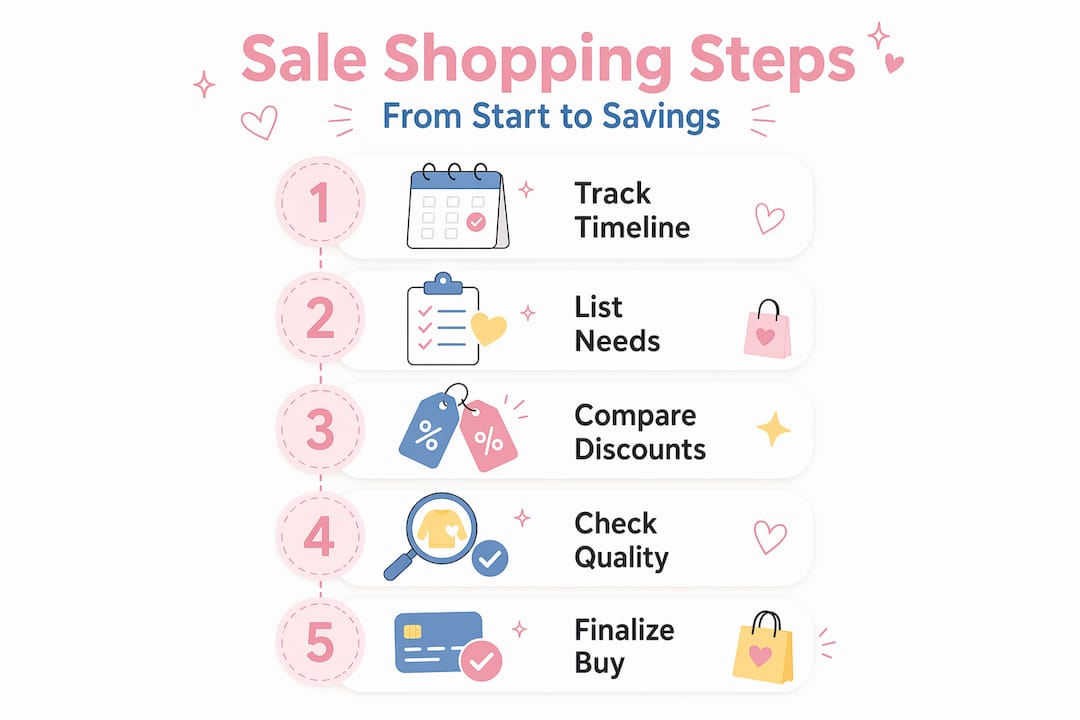
Category timing matters just as much as the overall cycle. Winter coats and boots hit their peak discounts between late January and March, often landing at 40 to 70% off. Swimwear and sandals peak in late summer, typically August into September. Holiday partywear drops sharply right after Christmas. Knowing this lets you plan purchases months in advance rather than reacting emotionally in the moment.
Pro Tip: Mark your seasonal shopping windows in your phone calendar now. Set a reminder for late January for outerwear, late August for resort wear, and the first week of January for holiday pieces. You will never miss a peak discount window again.
Building your pre-sale shopping checklist
Planning your shopping around the calendar and categories transforms clearance shopping from a guessing game into a strategic system for your wardrobe. The women who walk away with the best pieces are not the ones who browse the most. They are the ones who arrive with a clear picture of what they need and what price makes it worth buying.
Start by auditing your wardrobe before any sale begins. Note the gaps: the tailored blazer you keep wishing you owned, the versatile midi dress that works from brunch to boardroom, the classic leather-look handbag that ties every outfit together. These gaps become your shopping list, and your list becomes your filter against impulse buys.
Once your list is ready, assign a discount threshold to each item based on how much you genuinely want it:
- Wardrobe staples (neutral blazers, classic trousers, timeless blouses): Buy at 30% off or more. These pieces earn their cost-per-wear back quickly.
- Trendy pieces you love but do not need urgently: Wait for 50% off or deeper before committing. The trend will still feel fresh next season.
- Impulse buys and bold statement pieces: Hold out for 70% off. At that price, even a piece you wear twice has paid for itself.
- Accessories and jewelry: These often discount later than clothing, so track them separately and be patient.
The next layer of preparation involves tools. Browser extensions like Honey or Capital One Shopping track price history and apply coupon codes automatically. Online price alerts and restock notifications on retailer apps mean you do not have to refresh pages obsessively. You set the alert once, and the system works for you.
Pro Tip: Create a dedicated “wishlist” folder in your browser bookmarks for sale items you are tracking. When a price alert fires, you can compare across multiple tabs in seconds rather than hunting through your history.
Prioritize pieces with strong cost-per-wear logic. A silk-look blouse at 60% off that you wear twice a week for two years costs you almost nothing per outfit. A trendy printed mini dress at 80% off that you wear once is still a waste of money. The discount is only as valuable as the wearability of the piece.
Executing your sale shopping in-store and online
Knowing when and what to buy only gets you halfway there. The execution phase is where deals are won or lost, and it rewards those who understand a few insider tactics.
For in-store seasonal fashion clearance, timing your visit matters more than most shoppers realize. Early weekday mornings, particularly Tuesday through Thursday, are when stores reset markdown tags overnight and restock cleared sections. Weekend crowds have already picked through the best selections by Saturday afternoon. If you can shop on a Tuesday morning, you are seeing the freshest prices and the fullest racks.
Once inside, navigate with purpose:
- Head to endcaps and perimeter racks first. These are high-signal zones where clearance merchandise gets consolidated. Retailers place deeply discounted pieces here to move them quickly, and they are often overlooked by casual browsers.
- Scan for fragmented size runs. When a rack shows only one or two sizes remaining across multiple styles, that is a late-stage markdown signal. If your size happens to be among the survivors, you have found a genuine bargain.
- Check the back of the rack. Shoppers tend to grab from the front. The back often holds the same pieces untouched, sometimes with slightly different colorways or sizes.
- Bring a list and stick to it. The physical experience of a sale floor is designed to encourage browsing and impulse decisions. Your list is your anchor.
Online shopping offers a different set of advantages. Size filtering means you only see what is actually available in your measurements, saving you from the frustration of falling in love with a sold-out piece. Automated tracking tools remove the emotional urgency that physical sales create. You can compare prices across multiple retailers in a single browser session without walking a single step.
One critical point many shoppers overlook: clearance does not automatically mean final sale. Retailers are required to mark items explicitly as “Final Sale” if returns are not accepted. Many discounted pieces remain fully returnable, which dramatically reduces your fit risk when shopping online. Always check the return policy on the product page before purchasing, not after.
The most common mistakes at this stage are buying too early on a modest 20% discount when deeper cuts are coming, and waiting so long that your size disappears entirely. The solution is to know your category timeline and commit once your personal discount threshold is met.
Verifying your deal before you buy
A 60% discount tag means nothing if the original price was inflated or the quality cannot survive a full season of wear. This verification step is what separates truly savvy shoppers from those who simply buy more during sales.
Use price history tools to confirm the markdown is real. Browser extensions and sites that track retail price history will show you whether a piece was genuinely priced higher before the sale or whether the “original” price was artificially set to make the discount look impressive. If the price has been stable for months and then dropped, that is a legitimate end of season discount.
Consider these verification steps before every purchase:
- Compare across at least two retailers. The same or similar piece may be discounted more deeply elsewhere, or a competitor may have it in stock at a better base price.
- Read the fabric and care label. A beautiful silhouette in a fabric that pills after three washes is not a bargain at any price. Look for natural fiber blends or quality synthetic constructions that hold their shape.
- Stack your discounts deliberately. Combining loyalty rewards, promo codes, and cashback programs can add 5 to 10% on top of existing markdowns. That difference compounds meaningfully across a full season of strategic shopping.
- Confirm return eligibility. As noted above, clearance items are often returnable unless explicitly marked otherwise. Knowing you can return something removes the pressure to decide under uncertainty.
- Ask yourself the “full price” question. Would you buy this piece at full price if you had the budget? If the answer is yes, the sale price is a genuine gift. If the answer is no, the discount is doing emotional work that the piece itself cannot justify.
| Verification check | Why it matters |
|---|---|
| Price history confirmation | Reveals whether the “original” price was real or inflated |
| Cross-retailer comparison | Identifies whether a better deal exists nearby |
| Fabric and quality check | Prevents buying pieces that will not survive a season |
| Return policy review | Reduces fit and style risk on online purchases |
| Discount stacking | Maximizes effective savings beyond the headline markdown |
My honest take on mastering sale shopping
I have watched countless women walk into sales with the best intentions and walk out with bags full of pieces they never wear. The common thread is almost always the same: they shopped the discount, not the wardrobe.
What changed my own approach was a simple rule I gave myself years ago. I ask whether a piece earns its place in my wardrobe at full price before I let the discount influence my decision. If the answer is yes, I buy confidently. If the answer is maybe, I wait for a deeper cut. If the answer is no, I walk away no matter how low the price goes.
The other lesson I learned the hard way is that patience and decisiveness are not opposites. You need both. Patience to wait for the right discount window. Decisiveness to act the moment your threshold is met, because your size will not wait for you to sleep on it.
The women I know with the most effortlessly polished wardrobes are not the ones who spend the most. They are the ones who shop with a clear vision, a disciplined checklist, and the confidence to walk away from anything that does not genuinely serve their style. That clarity is something you can build, one well-timed purchase at a time. 🌟
— John
Discover your next wardrobe favorite at Thechiccollectionco
You have the strategy. Now comes the most enjoyable part: finding pieces that genuinely deserve a place in your wardrobe.

Thechiccollectionco curates a thoughtfully selected range of women’s fashion designed to blend timeless elegance with contemporary trends, so every piece you discover feels both current and enduring. From polished women’s tops and shirts that anchor a dozen different outfits to beautifully crafted curated dresses that carry you from casual afternoons to evening occasions, the collection is built for women who want style without compromise. Every order ships free, and a money-back guarantee means you shop with complete confidence. For a finishing touch that completes any look, the heart-shape PU leather crossbody bag is a standout piece that pairs beautifully with both sale finds and full-price favorites. Your next signature look is waiting. 💫
FAQ
When is the best time to shop end-of-season sales?
The best time to shop end-of-season sales depends on the category. Winter coats and boots peak in discount between late January and March, while swimwear and summer pieces hit their lowest prices in August and September.
How deep do end-of-season discounts actually get?
Retail markdowns typically start at 25 to 30% and deepen to 70 to 80% or more by the final clearance stage, which falls roughly 24 to 28 weeks after a collection’s initial release.
Is clearance always final sale?
No. Retailers must explicitly label items as “Final Sale” for returns to be excluded. Many clearance pieces remain fully returnable, so always check the return policy before purchasing.
How can I avoid impulse buying during sales?
Set a clear discount threshold for each item on your list before you shop: 30% for staples, 50% for items you like but do not urgently need, and 70% or more for bold or trend-driven pieces.
Can I stack discounts on top of sale prices?
Yes. Combining promo codes, cashback programs, and loyalty rewards can add 5 to 10% in savings on top of existing markdowns, making your effective discount significantly deeper than the headline price suggests.