
The white tie dress code for women is defined as the most formal dress standard in Western social etiquette, requiring a full-length evening gown in luxury fabrics such as silk, chiffon, or velvet. According to Emily Post and Vogue, floor-length gowns are non-negotiable for women to comply with white tie standards. Short dresses, midi silhouettes, and cocktail attire are entirely off the table. White tie signals immediate, flawless formality, and your gown is the single most important decision you will make for the evening.
What materials and gown styles are right for white tie women’s attire?
Your gown fabric carries as much weight as its silhouette at a white tie event. Preferred fabrics include silk, chiffon, and velvet because they drape with natural elegance and photograph beautifully under formal lighting. Heavier fabrics like duchess satin and brocade also meet the standard, lending a structured, regal quality to ball gown silhouettes. Avoid synthetic blends that catch light awkwardly or wrinkle under prolonged wear.
Ball gowns and formal evening gowns are the two silhouette categories that define white tie attire guidelines for women. A ball gown features a fitted bodice and a full, sweeping skirt, making it the most traditional choice for state dinners and inaugural balls. An evening gown, by contrast, flows in a sleek column or A-line shape from shoulder to floor, offering a more modern interpretation that still meets the formality threshold. Both are entirely appropriate, and your choice should reflect your comfort and body confidence.
White tie vs. black tie: gown length and fabric compared
Understanding the distinction between these two dress codes prevents costly wardrobe mistakes. The table below clarifies the key differences:
| Feature | White tie | Black tie |
|---|---|---|
| Gown length | Floor-length only | Floor-length preferred, midi sometimes acceptable |
| Fabric standard | Silk, chiffon, velvet, satin | Broader range including crepe and lace |
| Accessory expectation | Gloves, tiaras, fine jewelry | Jewelry encouraged, gloves optional |
| Footwear | Formal heels, sometimes restricted | Formal heels or dressy flats |
| Overall formality | Highest level of Western dress | High formality with more flexibility |
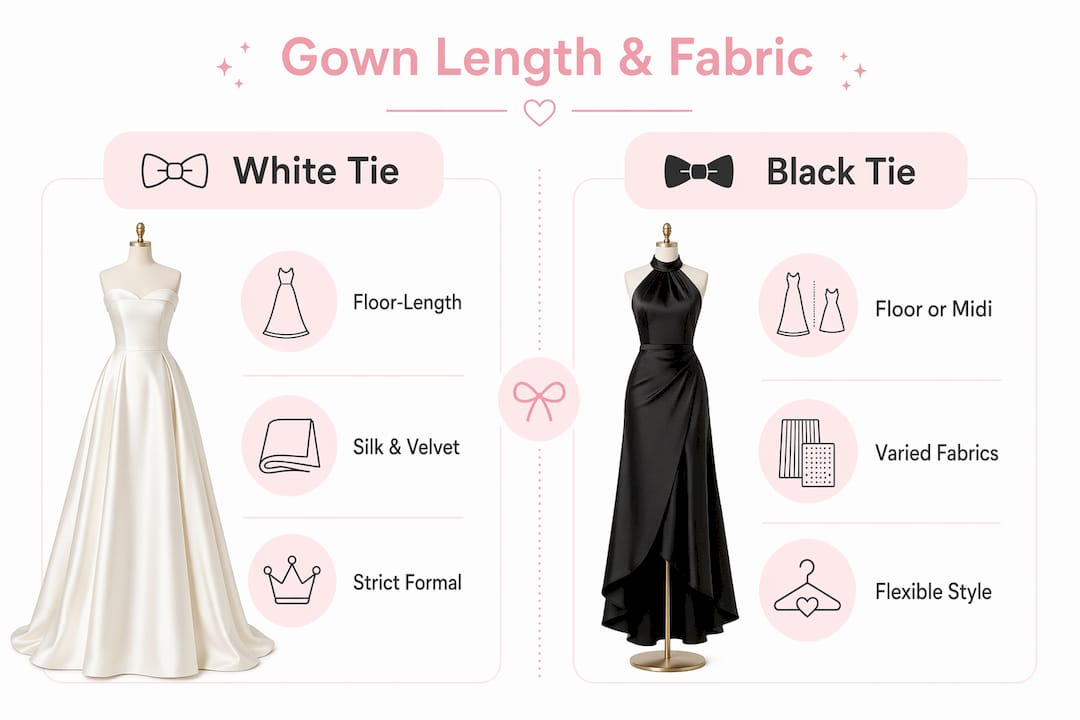
White tie always requires a full-length gown for women, while black tie permits more variety in both length and fabric. This distinction matters because arriving in a midi dress to a white tie event is the equivalent of wearing a suit to a black-tie gala. The formality gap is significant and socially visible.
Pro Tip: When selecting your gown color, deep jewel tones like midnight navy, emerald, and burgundy photograph exceptionally well under formal event lighting and pair naturally with fine jewelry. For more guidance, explore evening gown color choices before you commit to a shade.
Which accessories are expected for women in white tie?
Accessories at a white tie event are not decorative afterthoughts. They are part of the dress code itself, and getting them right signals that you understand the formality of the occasion. Here is what you need to know:
-
Opera gloves: Opera-length gloves are traditional but optional, reaching above the elbow and typically made in white or ivory kid leather or satin. Etiquette dictates wearing them while greeting guests and dancing, then removing them at dinner to avoid the awkward challenge of eating in gloves. Keep them folded neatly in your lap or clutch once removed.
-
Tiaras: Tiaras are traditionally reserved for married women or brides and are only appropriate when the invitation specifically states “white tie with decorations.” Wearing a tiara to a standard white tie event without that wording risks a social misstep. When in doubt, leave it at home.
-
Jewelry: Diamonds, pearls, and drop earrings are the gold standard for white tie jewelry. Jewelry is considered a must, not an option, at this level of formality. A statement necklace paired with understated earrings, or a chandelier earring with a bare neckline, both work beautifully. Choose pieces that sparkle under candlelight and complement your gown’s neckline.
-
Evening clutch: Evening clutches should be small and elegant, crafted from silk, satin, kid leather, or jewel-encrusted materials. A structured minaudière in gold or silver is a classic choice. Avoid oversized bags, canvas totes, or anything with visible branding.
-
Footwear: Formal heels are the standard, and the higher the event’s prestige, the more specific the footwear rules become. Notably, stiletto heels are forbidden at certain traditional white tie venues, including the Versailles Ball, to protect historic flooring. Block heels or kitten heels in satin or metallic leather are a graceful alternative.
Pro Tip: Always check the invitation wording carefully before adding gloves or a tiara to your look. Accessory etiquette nuances depend heavily on event context, and a quick read of the invite can save you from an avoidable faux pas.
How does white tie compare to other formal dress codes for women?
White tie sits at the absolute apex of formal dress codes, and white tie events remain rare in modern social life. Presidential inaugural balls, state dinners, high-society weddings, and notable galas like the Met Gala are among the few occasions where this standard still applies. The rarity of white tie is precisely why many women feel uncertain when the invitation arrives.
The core distinction is non-negotiation. Women’s white tie attire is actually simpler than men’s in terms of requirements, focusing primarily on gown length and fabric quality. Men must navigate white tie tailcoats, waistcoats, and specific shirt studs. For women, the rules are fewer but equally strict. A floor-length gown in a formal fabric is the foundation, and everything else builds from there.
Black tie allows a cocktail dress at some events, particularly in American contexts. White tie never does. Semi-formal and creative black tie codes open the door to jumpsuits, palazzo pants, and fashion-forward interpretations. White tie closes that door firmly. The social context of white tie signals guests of high social standing, where the expectation is that every guest arrives already knowing the rules.
Gala dress codes like “festive attire” or “formal” fall below white tie on the formality scale and offer significantly more creative latitude. If your invitation says “white tie,” treat it as the highest possible standard and dress accordingly, without improvisation.
How to style your hair, makeup, and overall look for white tie
The finishing details of your white tie look carry the same weight as the gown itself. A stunning silk column dress paired with a rushed blowout and minimal makeup reads as incomplete at this level of formality. Here is how to bring the full picture together:
-
Hair: Classic updos are the traditional choice because they showcase your earrings and neckline, both of which are focal points at white tie events. A chignon, French twist, or sculpted updo with soft face-framing pieces strikes the right balance between polished and graceful. Loose, casual waves read as underdressed at this formality level.
-
Makeup: White tie makeup favors defined elegance over trendy experimentation. A classic red lip with minimal eye makeup, or a smoky eye with a nude lip, both work beautifully. Avoid glitter, graphic liner, or heavily editorial looks that compete with your gown rather than complement it.
-
Footwear coordination: Your shoes and clutch should share a visual language with your gown. A silver beaded gown pairs naturally with silver satin heels and a matching minaudière. A deep velvet gown in burgundy calls for gold or nude footwear to avoid visual heaviness at the hem. For tailoring that ensures your gown hem sits at exactly the right length for your chosen heel height, proper dress tailoring makes a visible difference.
-
Comfort for long events: White tie events often run for several hours, spanning cocktail receptions, seated dinners, and dancing. Choose heels you can stand in for at least three hours, and consider a small cushioning insert for the ball of your foot. If your gown has a train, practice walking in it before the event so you move with confidence rather than caution.
-
Common styling mistakes to avoid: Wearing too many statement pieces at once dilutes the impact of each one. Choose one focal point, whether that is a dramatic necklace, a bold earring, or a jeweled clutch, and let the rest of your accessories support it quietly. Over-accessorizing at white tie reads as effort rather than ease.
Key takeaways
White tie dress code for women requires a floor-length gown in silk, chiffon, or velvet, paired with fine jewelry and formal accessories that match the event’s highest formality standard.
| Point | Details |
|---|---|
| Gown length is non-negotiable | Only floor-length gowns in formal fabrics like silk, chiffon, or velvet meet white tie standards. |
| Accessories follow strict protocol | Opera gloves and tiaras are traditional but context-dependent; fine jewelry is always expected. |
| White tie outranks black tie | White tie requires stricter gown length and accessory rules than any other formal dress code. |
| Styling completes the look | Classic updos, refined makeup, and coordinated footwear are as important as the gown itself. |
| Event context matters | White tie applies to state dinners, inaugural balls, and elite galas, not standard formal events. |
White tie confidence: my honest perspective on dressing for the highest standard
I have spent years advising women on formal attire, and white tie is the dress code that generates the most anxiety, almost always unnecessarily. The rules are actually straightforward once you accept that the gown does most of the work. A floor-length silk or chiffon dress in a rich color, paired with fine jewelry and a polished updo, puts you exactly where you need to be.
The mistake I see most often is women trying to inject too much personal style into a white tie look. This is not the occasion for fashion-forward experimentation. White tie is a tradition, and the beauty of tradition is that it removes the pressure to be original. Your job is to be impeccably turned out, not to stand out.
That said, “impeccably turned out” does not mean identical to every other woman in the room. Your gown’s color, the cut of your silhouette, and the jewelry you choose all express your individuality within the framework. A woman in a deep emerald velvet column gown with chandelier earrings looks entirely different from a woman in a blush silk ball gown with pearl drops, and both are perfectly correct.
The one thing I always tell women before a white tie event: wear the dress, do not let the dress wear you. Practice walking in your gown and heels before the evening. Know where your train is at all times. Remove your gloves before dinner without making a production of it. When you move through the room with ease, the formality becomes a celebration rather than a performance.
— John
Dress for the occasion with Thechiccollectionco
Thechiccollectionco curates a selection of formal evening gowns and elegant accessories designed to meet the highest standards of formal event dressing. From floor-length silhouettes in luxurious fabrics to fine jewelry that catches the light exactly as it should, every piece is chosen with the discerning woman in mind. The collection includes elegant maxi dress options with the drape and structure that white tie demands, alongside jewelry and evening bags to complete your look. Free delivery on all orders and a money-back guarantee mean you can shop with full confidence. Explore the full formal wear collection and find the pieces that make your white tie moment unforgettable.
FAQ
What is the white tie dress code for women?
White tie is the most formal Western dress code, requiring women to wear a full-length evening gown in formal fabrics such as silk, chiffon, or velvet. Short or midi dresses are not acceptable under any interpretation of this standard.
Are opera gloves required for white tie events?
Opera gloves are traditional but optional for women at white tie events. Etiquette recommends wearing them while greeting guests and dancing, then removing them at dinner.
Can women wear tiaras to white tie events?
Tiaras are traditionally reserved for married women or brides and are only appropriate when the invitation specifically states “white tie with decorations.” Wearing one without that invitation wording is considered a social misstep.
How is white tie different from black tie for women?
White tie always requires a floor-length gown, while black tie permits more flexibility in length and fabric. White tie also carries stricter expectations around accessories, including fine jewelry and formal footwear.
What jewelry is appropriate for a white tie event?
Diamonds, pearls, and drop earrings are the preferred choices for white tie jewelry. Fine jewelry is considered a requirement at this formality level, not an optional addition.