
You open the invitation, read “cocktail attire,” and suddenly the confidence you had five minutes ago disappears. The cocktail dress dress code explained in plain terms is this: you are aiming for semi-formal, polished, and celebration-ready, without crossing into ballgown territory. It sits right between smart casual and black tie, which means there is a generous but specific lane to dress within. Get it right and you walk in looking exactly as the host intended. This guide gives you everything you need to arrive with complete, radiant confidence.
Table of Contents
- Key takeaways
- Cocktail dress dress code explained: the 2026 definition
- Choosing the right silhouette, length, and style
- Footwear, accessories, and the finishing details
- Common mistakes that undermine a polished cocktail look
- Decoding themed or confusing cocktail invitations
- My honest take on mastering cocktail attire
- Discover your perfect cocktail look at Thechiccollectionco
- FAQ
Key takeaways
| Point | Details |
|---|---|
| Semi-formal is the target | Cocktail attire sits between smart casual and black tie, requiring polish without full formal gowns. |
| Knee to midi length works best | Dress hems just above or below the knee strike the right balance between chic and appropriate. |
| Alternatives to dresses are valid | Tailored jumpsuits, polished separates, and pant suits can meet cocktail standards beautifully. |
| Accessories should be refined | A clutch or structured bag and elegant jewelry complete the look without overpowering it. |
| Context changes interpretation | Evening venue, host cues, and event type all shift what “cocktail” looks like in practice. |
Cocktail dress dress code explained: the 2026 definition
The industry term for this style category is semi-formal attire, and cocktail attire is its most widely used, socially recognized expression. As multiple 2026 fashion guides describe, cocktail attire is the “middle ground,” emphasizing polished styling rather than formal gowns. Think elevated, festive, and intentional. Not austere. Not casual.
Historically, cocktail attire emerged in the 1920s and 1930s as a dress category for afternoon and early evening social gatherings. Back then, it was almost always a tea-length dress. Today, the concept has evolved to include a far wider range of silhouettes, fabrics, and even garment types, while still holding onto its core principle: dress up, but stay in the room with everyone else.
“Cocktail attire rewards dressing with intention, quality, and polish rather than following rigid checklists.” — What Is Cocktail Attire, SABLE WEST
Here is what the modern interpretation looks like in practice:
- Formality level: More dressed up than a work dinner, less structured than a gala or awards ceremony
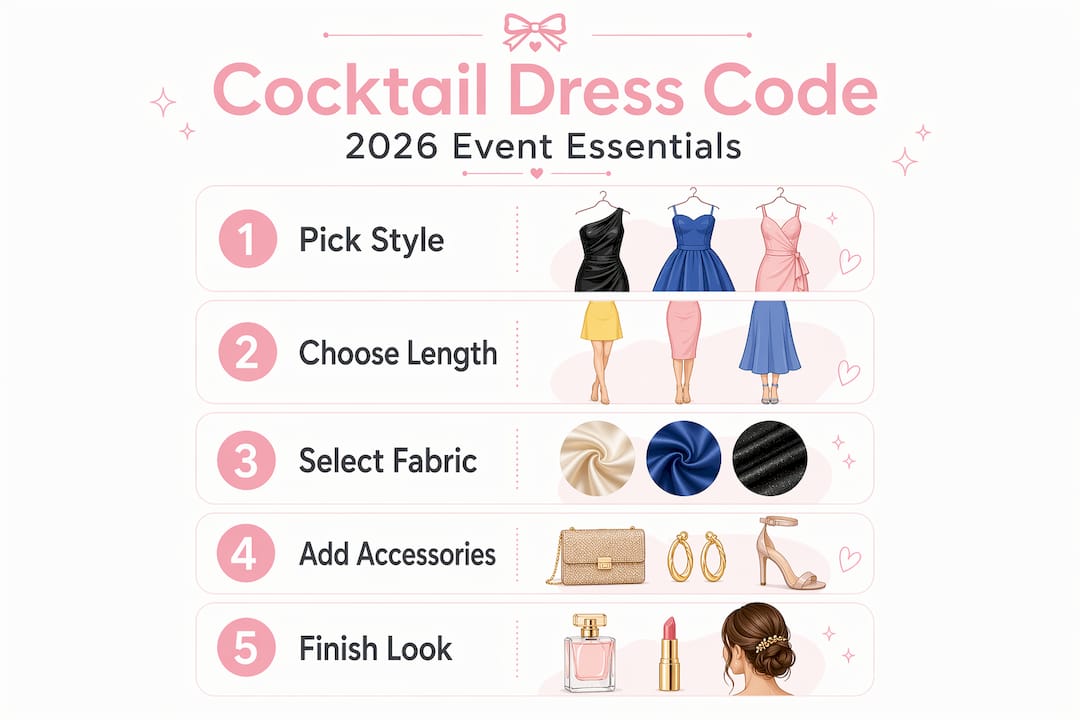
- Fabrics: Silk, chiffon, satin, lace, velvet, crepe, and structured jacquard all work beautifully
- Silhouettes: A-line, sheath, fit-and-flare, wrap, and tailored separates are all appropriate
- Colors: No limits here. Deep jewel tones, classic black, soft pastels, and bold prints are all welcome
- Occasion examples: Company galas, cocktail weddings, engagement parties, charity fundraisers, milestone birthday celebrations, and holiday events
The time of event and venue type also shape what cocktail attire looks like. A rooftop evening party in July calls for a different expression than a December indoor fundraiser. Same dress code, different energy.
Choosing the right silhouette, length, and style
Once you understand what cocktail attire is, the next step is choosing what to actually wear. Length is your first decision, and it has a surprisingly clear answer.
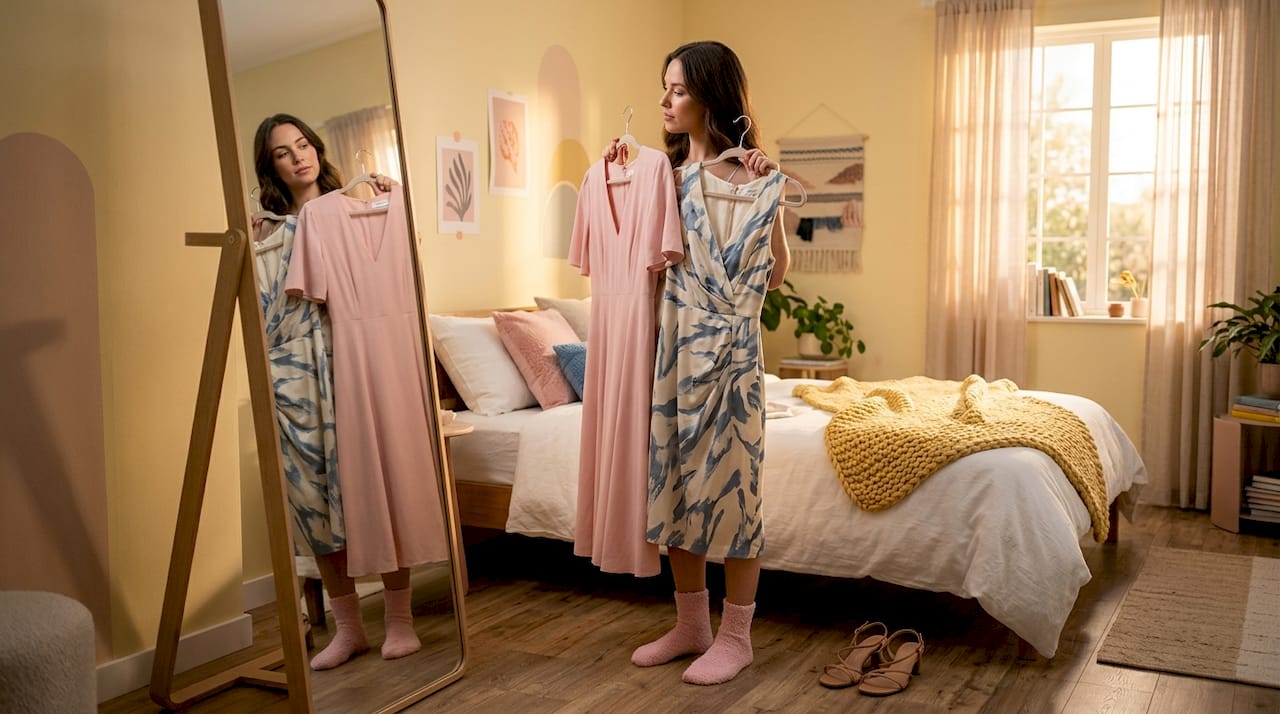
The ideal cocktail dress length lands just above or below the knee, with midi silhouettes sitting comfortably within the code. Floor-length gowns cross into black tie territory. Mini hemlines, while stylish in many contexts, generally read too casual for a polished cocktail event. When in doubt, aim for a hem that falls between mid-thigh and mid-calf and you will almost never go wrong.
| Style option | Formality fit | Best for |
|---|---|---|
| Knee-length sheath dress | Perfect | Evening events, weddings, galas |
| Midi wrap dress in silk | Perfect | Semi-formal dinners, celebrations |
| Tailored jumpsuit | Excellent | Cocktail events where you want to stand out |
| Polished two-piece set | Very good | Garden parties, daytime cocktail events |
| Mini dress | Too casual | Avoid unless host specifies otherwise |
| Floor-length gown | Too formal | Reserve for black tie occasions |
It is also worth knowing that cocktail attire does not require a dress at all. A sharply tailored jumpsuit in crepe or satin, a polished wide-leg trouser paired with a structured blouse, or an elegant blazer suit with refined accessories all meet the standard. The key is in the fabric and the finish. Your outfit should look like you thought about it. Quality and tailoring matter more than the specific garment type.
Pro Tip: If you are dressing for a cocktail wedding specifically, lean slightly more formal within the cocktail range. Choose elevated fabrics like lace or silk crepe and avoid any white, ivory, or champagne tones out of respect for the bride.
For seasonal considerations: in warmer months, chiffon, floral prints, and lighter colors feel entirely appropriate. In fall and winter, velvet, deep tones, and heavier crepe fabrics add the warmth and richness that suit both the temperature and the mood. Learning to pick colors for your evening event can genuinely transform your outfit from nice to memorable.
Footwear, accessories, and the finishing details
The dress you choose sets the foundation, but your shoes and accessories determine whether the look is truly polished or slightly off. This is where many women either over-invest or overlook entirely.
For footwear, heels are the standard recommendation for cocktail attire, but they do not need to be sky-high stilettos. Block heels offer the same formality with far more comfort over a long evening. Kitten heels are understated and graceful. What to avoid entirely: sneakers, flat sandals, and chunky boots. These choices instantly pull the overall look down in formality, no matter how beautiful your dress is.
For accessories, the guiding principle is refinement, not excess. Key choices include:
- Bag: A clutch or minaudière is the gold standard for cocktail events. A small structured shoulder bag also works. Large totes and casual crossbody bags disrupt the polished silhouette you have built.
- Jewelry: Statement earrings with a minimal necklace, or a delicate layered set, both work well. Avoid wearing every piece at once. If you want guidance on elegant jewelry pairings, a little research goes a long way.
- Color harmony: Your accessories do not need to match exactly, but they should speak the same tonal language. A warm gold clutch with warm-toned jewelry feels deliberate. A mix of cool silver and warm brass reads accidental.
Pro Tip: Keep your jewelry sparkling before any big event. A quick polish makes even modest pieces look luxurious under event lighting.
Seasonal accessorizing matters too. A delicate wrap or elegant shawl in cooler months adds both warmth and a layer of sophistication that works perfectly with cocktail silhouettes.
Common mistakes that undermine a polished cocktail look
Knowing what to wear is half the work. The other half is knowing what to avoid. These are the errors that most often pull a cocktail outfit off-course.
- Reaching for denim or jersey. These fabrics signal casual, no matter how well the piece fits. Denim and jersey are off-limits for cocktail attire. Save them for brunch.
- Wearing a full-length ballgown. This might seem like a safe choice because it feels formal, but it actually overshoots the brief. Cocktail attire is not black tie.
- Treating cocktail like a casual invitation. The word “cocktail” on an invitation is not a suggestion to dress comfortably. It is a specific social signal.
- Ignoring the venue and time of day. A daytime outdoor wedding and an evening city gala both say “cocktail” on the invitation, but they are not the same event. Let the setting guide your final choices.
- Asking no one when you are unsure. If an invitation leaves you genuinely uncertain, asking the host is not awkward. It is thoughtful. They will appreciate that you cared enough to ask.
The best cocktail outfit is one where the celebration is the center of attention, not what you are wearing. Read the room and dress with intention.
Understanding why tailoring matters is especially relevant here. A perfectly fitting outfit in the right fabric will always outperform a more expensive piece that does not sit correctly on your body.
Decoding themed or confusing cocktail invitations
Sometimes the invitation adds words after “cocktail” that raise more questions than they answer. “Coastal chic cocktail.” “Garden glam cocktail.” “Festive cocktail.” What do you do with that?
The trick is to split the instruction into two parts: the formality level and the visual theme. “Cocktail” tells you the formality. The second phrase tells you the mood.
Here is how to apply this framework:
- Coastal chic cocktail: Semi-formal is the baseline. The theme suggests lighter colors, flowing fabrics, perhaps a nautical palette. A flowing midi in white or sky blue with gold accessories reads perfectly.
- Garden glam cocktail: Floral prints, soft pastels, and feminine silhouettes feel right. Avoid muddy heels by choosing a block or wedge heel suitable for grass.
- Festive cocktail: This is your invitation to go richer in color and texture. Deep red, forest green, or metallic fabrics all deliver the festive quality without crossing into costume territory.
Confusing dress codes reflect the host’s mood and the setting, not a trick you need to solve perfectly. A subtle nod to the theme within your cocktail-appropriate outfit always reads as graceful and considered. You do not need to commit fully. Think: a light touch of coastal color, not a full nautical costume. And if the invitation language is genuinely baffling, ask the host directly. The answer will save you far more stress than guessing.
My honest take on mastering cocktail attire
I have seen women walk into cocktail events in gowns fit for the Met Gala, and I have seen them arrive in what looked like a business casual Tuesday. Both left feeling self-conscious, not because they lacked style, but because no one had ever explained that cocktail attire is principles-based, not rules-based.
What I have found after years of watching these moments unfold is that the women who feel most at ease are the ones who dressed with intention, not the ones who dressed with the most expensive pieces. A well-fitted midi in crepe with a simple clutch and elegant earrings will carry you through 90% of cocktail events with grace. Full stop.
My honest advice: invest in one or two pieces that you know work for you, keep them tailored beautifully, and learn how to restyle them across seasons. Exploring timeless versus trendy fashion choices will serve you far better than chasing every new silhouette. The cocktail dress code is not a gate to keep you out. It is simply an invitation to show up as your most polished, considered self.
— John
Discover your perfect cocktail look at Thechiccollectionco
You now have the knowledge. The next step is finding pieces that actually bring it to life.
Thechiccollectionco curates a refined selection of cocktail-appropriate dresses that balance timeless elegance with modern silhouettes, all at prices that make dressing beautifully feel entirely within reach. Pair your chosen look with a statement accessory, such as this stunning heart-shaped PU leather handbag, which brings polished, feminine structure to any cocktail outfit. Every order ships free, and a money-back guarantee backs every purchase, so you can dress with confidence from the first click to the last compliment.
FAQ
What is cocktail attire for women?
Cocktail attire is a semi-formal dress standard sitting between smart casual and black tie. It calls for polished, elevated dressing using quality fabrics and refined silhouettes appropriate for celebratory events.
What length should a cocktail dress be?
The ideal length lands just above or below the knee, with midi dresses also fitting the standard well. Mini hemlines read too casual, while floor-length gowns cross into black tie territory.
Can you wear a jumpsuit to a cocktail event?
Yes. A tailored jumpsuit in a semi-formal fabric like crepe, satin, or structured silk fully meets cocktail dress guidelines. The fabric and fit matter far more than whether the garment is a dress.
What shoes are appropriate for cocktail attire?
Heels are the standard choice, though they do not need to be stilettos. Block heels and kitten heels both maintain the required formality. Sneakers, casual flats, and chunky boots are not appropriate.
What does “cocktail attire” mean on a wedding invitation?
A cocktail dress for weddings signals semi-formal dressing, typically a knee-length or midi dress in elevated fabric. Avoid floor-length gowns, very casual pieces, and any white or ivory tones out of respect for the bridal party.