
Morning dress for women is defined as the most formal daytime dress code, reserved for prestigious events before 4:30 PM or 6:00 PM, requiring modest knee-length or longer dresses paired with elegant accessories like hats or fascinators. You will encounter this dress code at events like Royal Ascot, daytime weddings, and royal garden parties, where the expectation is refined elegance rather than evening glamour. Unlike men’s morning dress, which follows a near-uniform structure of morning coat, waistcoat, and striped trousers, women’s morning dress offers stylistic flexibility within clear modesty boundaries. Understanding those boundaries is what separates a guest who looks effortlessly poised from one who simply looks overdressed or underdressed.
What is morning dress for women, exactly?
Morning dress for women is formal daywear, not a specific garment, but a dress code standard that governs silhouette, length, color, and accessories for high-profile daytime occasions. The term itself causes confusion because it has two entirely different historical meanings. Today, it refers to the formal protocol seen at events like Royal Ascot and Church of England weddings. Historically, it meant something far more casual, and understanding that distinction matters.
Men’s morning dress has remained virtually unchanged since the early 20th century, a structured ensemble of morning coat, waistcoat, and striped trousers topped with a top hat. Women’s equivalent has evolved far more dynamically, offering broader stylistic range while still demanding strict adherence to modesty and formality principles. This flexibility is both a freedom and a responsibility: you have room to express your personal style, but the core rules are non-negotiable.
“The guiding principle for female morning dress is modesty and elegance consistent with event formality, often summed as: if HRH the Princess of Wales wouldn’t wear it, you shouldn’t either.”
That single standard captures everything. Morning dress is not about fashion-forward statements. It is about grace, proportion, and respect for the occasion.
How did women’s morning dress evolve historically?
The phrase “morning dress” once described something entirely different. In the 1800s and early 1900s, a woman’s morning dress was an informal at-home wrapper, a loose-fitting garment worn for breakfast and household chores, typically made from muslin or gingham. These wrappers were never worn in public company. They were the 19th-century equivalent of loungewear.
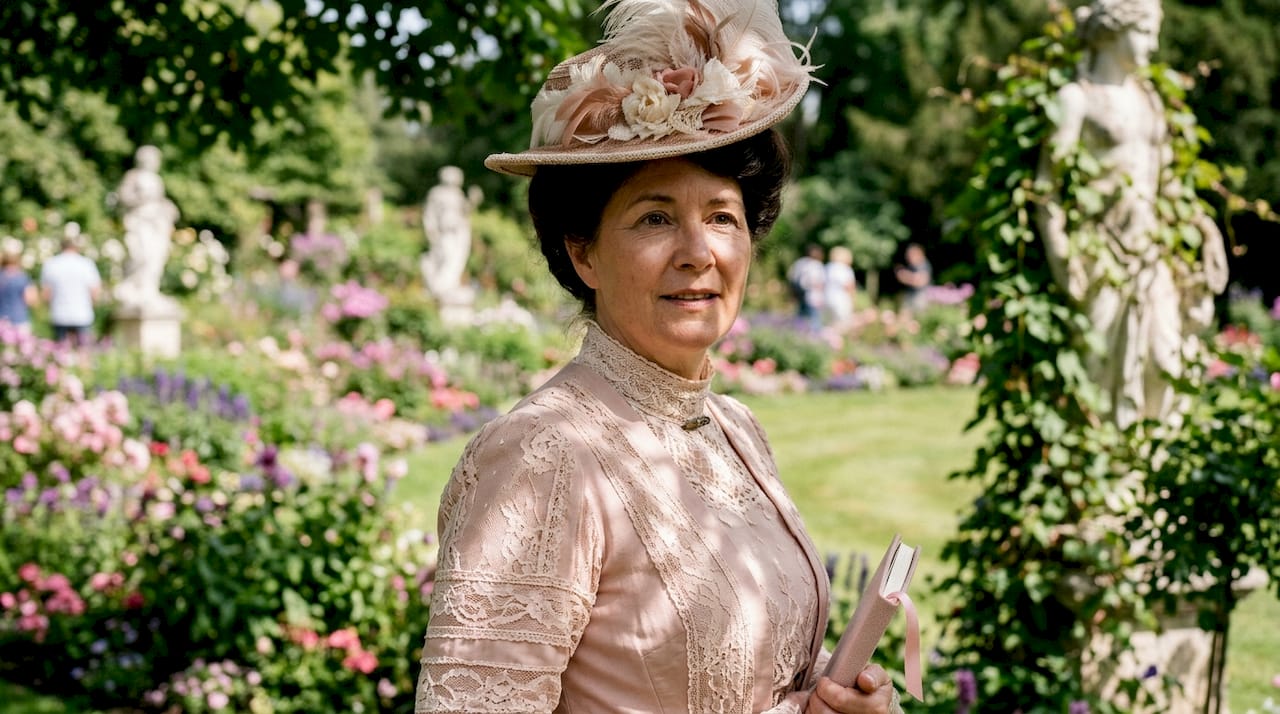
The modern formal morning dress code developed in parallel with men’s formal daywear traditions, gradually becoming the standard for prestigious daytime events as social calendars formalized through the late Victorian and Edwardian eras. By the mid-20th century, the term had fully shifted meaning. Today, confusing historical morning dress with its modern formal counterpart is a common mistake that leads women to underestimate the occasion entirely.
Women sometimes incorporate frock coat-inspired overcoats or formal ankle-length trousers as acceptable alternatives within the morning dress framework, reflecting the heritage of the men’s tailcoat tradition. This evolution shows that women’s formal daywear has always adapted to cultural shifts while preserving its core commitment to daytime elegance. The result is a dress code with deep historical roots and genuine room for modern interpretation, provided you stay within its boundaries.
What are the style guidelines for women’s morning dress?
Women’s morning dress does not follow a rigid uniform, but it does follow clear rules. Modesty and formality define every choice, from hemline to neckline to accessory. Here is what those rules look like in practice:
Hemline and silhouette:
- Dresses must fall at or below the knee. Midi and tea-length silhouettes are ideal.
- Floor-length gowns are generally avoided unless the venue or invitation specifically calls for them, as they read as evening wear.
- Fitted or A-line cuts work well. Avoid anything that reads as cocktail or party wear.
Neckline and sleeves:
- Modest necklines are expected. High necks, boat necks, and V-necks that do not plunge are all appropriate.
- Sleeves or structured bodices are preferred. Strapless or heavily embellished evening-style tops are out of place.
- If you choose a sleeveless dress, a tailored jacket or elegant wrap brings it into morning dress territory.
Color and fabric:
- Daytime-appropriate colors define the palette: soft pastels, warm neutrals, classic navy, and confident jewel tones all work beautifully.
- Avoid dark colors like black or deep burgundy that read as evening wear, unless the event specifically permits them.
- Fabrics like silk, chiffon, structured crepe, and lace are all excellent choices. Heavy beading or sequins belong at evening events.
Hats and fascinators:
- A hat or fascinator is the defining accessory of morning dress for women, serving the same symbolic role as the male top hat. Even when not strictly mandatory, wearing one signals that you understand and respect the dress code.
- Fascinators should be substantial enough to be visible. A tiny clip-on flower does not fulfill the spirit of the tradition.
Pro Tip: Choose a hat or fascinator that complements your dress color rather than matching it exactly. A tonal contrast creates a more polished, intentional look than a perfect match.
How does morning dress compare to evening dress and other formal codes?
Understanding where morning dress sits within the formal wear hierarchy helps you make confident choices. The table below clarifies the key distinctions:
| Dress code | Time of day | Women’s attire | Key markers |
|---|---|---|---|
| Morning dress | Before 4:30 to 6:00 PM | Knee-length or midi dress, hat or fascinator | Modesty, daytime colors, structured silhouette |
| White tie | Evening | Full-length ball gown | Maximum formality, dramatic silhouette |
| Black tie | Evening | Floor-length or formal cocktail gown | Glamour, darker palette, evening fabrics |
| Semi-formal | Flexible | Cocktail dress or dressy separates | Less strict, broader style range |
Morning dress is the daytime equivalent of white tie, carrying the same expectation of absolute formality but applied to daylight hours. This distinction matters because many women default to evening gown thinking when they hear “formal,” which produces the wrong result entirely. A floor-length sequined gown is stunning at a black tie gala. At a morning dress wedding, it reads as a misunderstanding of the occasion.
The time boundary is also worth noting. Morning dress applies to events before approximately 4:30 PM to 6:00 PM depending on the event. After that threshold, evening dress codes take over. For daytime weddings and royal events, particularly those in Christian or Anglican traditions, morning dress is the expected standard. Knowing this prevents the common mistake of arriving in evening wear at an afternoon ceremony.
For a deeper look at how white tie formalwear compares, the white tie guide for women from Thechiccollectionco covers the evening counterpart in full detail.
How to accessorize and adapt morning dress for any formal occasion
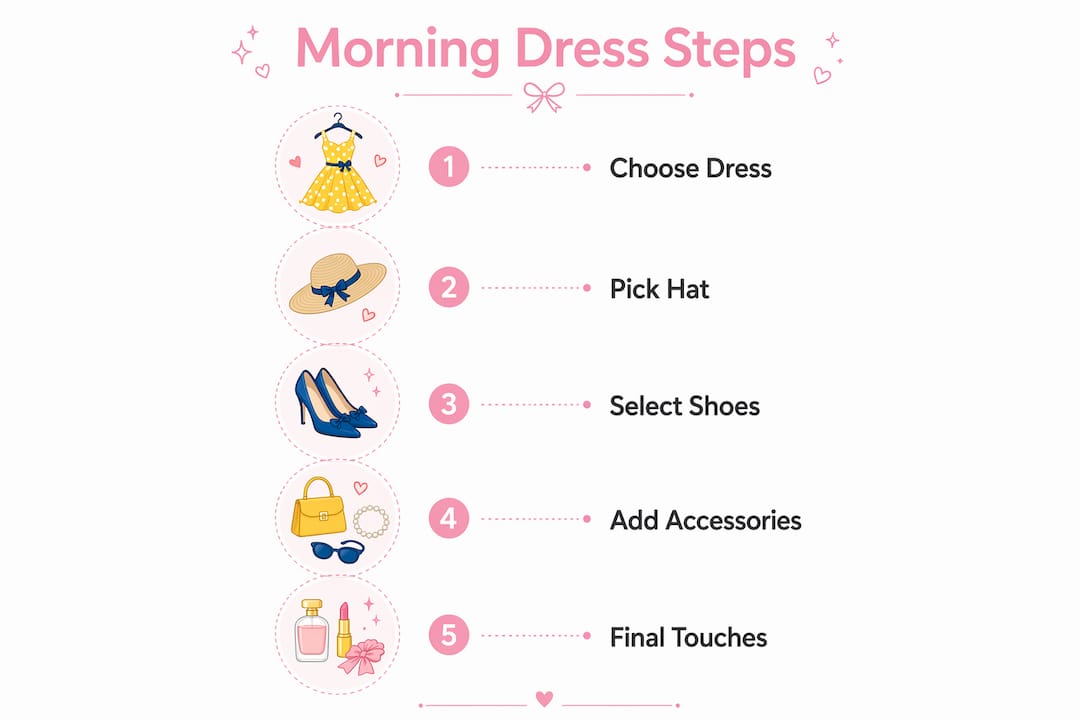
Getting the dress right is half the work. The accessories complete the picture, and they follow their own set of considered rules. Here is a practical sequence for building a morning dress outfit that works for any formal daytime occasion:
-
Start with the hat or fascinator. This is your anchor piece. Choose it before finalizing your dress if possible, since it sets the tone for the entire look. A structured wide-brim hat reads more formal than a small fascinator, making it better suited to events like Royal Ascot or a formal church wedding.
-
Select your bag. An elegant clutch is the standard choice. It should be compact, structured, and in a color that coordinates with your dress. Avoid large totes, crossbody bags with visible hardware, or anything that reads as casual. A small structured shoulder bag in leather or satin is also appropriate.
-
Choose jewelry with restraint. Modest, refined pieces work best. Pearl earrings, a delicate gold necklace, or a single statement bracelet all complement morning dress beautifully. For guidance on modest jewelry styling that suits formal daywear, the principles are consistent: less is more, and quality reads louder than quantity.
-
Consider your shoes carefully. A pointed or almond-toe heel in a neutral or complementary color is the safest and most elegant choice. Block heels and kitten heels also work well, particularly for outdoor events where stilettos may sink into grass. Avoid open-toe sandals, platforms, or anything with heavy embellishment.
-
Layer thoughtfully for the season. In cooler months, a tailored coat or structured blazer in a complementary fabric keeps you warm without compromising the formality of your look. Avoid casual knitwear or oversized outerwear that disrupts the silhouette.
Pro Tip: For outdoor morning dress events like Royal Ascot or garden parties, choose block heels or wedges over stilettos. Most venues provide grass or gravel surfaces, and a heel that sinks undermines both your comfort and your composure.
For further inspiration on building a formal wardrobe that transitions across occasions, Thechiccollectionco’s guide to elegant office attire for women offers a strong foundation in modest, structured dressing.
Key takeaways
Morning dress for women is the most formal daytime dress code, defined by knee-length or longer modest dresses, daytime-appropriate colors, and a hat or fascinator as the signature accessory.
| Point | Details |
|---|---|
| Definition of morning dress | Formal daytime dress code for events before 4:30 to 6:00 PM, not a specific garment. |
| Core style rules | Hemline at or below the knee, modest neckline, daytime colors, no evening gown silhouettes. |
| Signature accessory | A hat or fascinator signals adherence to morning dress etiquette, similar to the male top hat. |
| Distinction from evening wear | Morning dress prioritizes modesty and daytime elegance; evening codes allow floor-length gowns and dramatic styling. |
| Accessory hierarchy | Clutch bag, restrained jewelry, and a heel-appropriate shoe complete the look without overpowering the dress. |
Why morning dress deserves more respect than it gets
I have spent years watching women arrive at formal daytime events visibly uncertain about what they are wearing, and almost every time, the confusion traces back to one thing: they treated morning dress as a vague suggestion rather than a precise standard. The dress code has a reputation for being stuffy, but I think that misses the point entirely.
Morning dress is one of the few remaining dress codes that asks you to think carefully about context, proportion, and occasion. That is not a limitation. It is an invitation to dress with real intention. The women who wear it best are not the ones in the most expensive outfits. They are the ones who understood the event, chose a silhouette that suited them within the rules, and wore it with complete confidence.
The hat question is where most women hesitate, and I understand why. Wearing a hat feels theatrical if you are not used to it. But a well-chosen fascinator or structured hat does something remarkable: it frames your face, completes the formality of the look, and signals that you took the occasion seriously. That signal matters at events like Royal Ascot or a formal wedding, where the dress code is part of the shared experience.
My advice is to treat morning dress not as a constraint but as a creative brief. The rules are clear. Within them, you have genuine room to express your personal style through color, fabric, silhouette, and accessories. That combination of structure and freedom is what makes morning dress one of the most rewarding dress codes to get right.
— John
Complete your morning dress look with Thechiccollectionco
The right bag transforms a morning dress outfit from polished to truly complete. Thechiccollectionco curates elegant, compact handbags designed precisely for formal daytime occasions, where a structured clutch or refined shoulder bag speaks as clearly as the dress itself. The heart-shape PU leather handbag is a standout choice: compact, structured, and refined enough to complement any morning dress silhouette. With free delivery on every order and a money-back guarantee, Thechiccollectionco makes it easy to complete your formal look with confidence. Browse the full collection and find the accessories that bring your morning dress outfit together beautifully.
FAQ
What is morning dress for women?
Morning dress for women is a formal daytime dress code requiring modest, knee-length or longer dresses in daytime-appropriate colors, paired with a hat or fascinator and elegant accessories. It applies to events before approximately 4:30 PM to 6:00 PM, including formal weddings, Royal Ascot, and royal garden parties.
Is morning dress more formal than black tie?
Morning dress and black tie occupy the same tier of formality but apply to different times of day. Morning dress is the daytime equivalent of white tie, carrying strict protocol for daylight hours, while black tie governs evening events with floor-length gowns and dramatic styling.
Do women have to wear a hat for morning dress?
A hat or fascinator is the defining accessory of morning dress etiquette for women, serving the same symbolic role as the male top hat. While not always strictly mandatory, wearing one signals clear adherence to the dress code and is strongly recommended at prestigious events.
What colors are appropriate for women’s morning dress?
Daytime-appropriate colors including soft pastels, warm neutrals, classic navy, and confident jewel tones are all suitable for morning dress outfits. Dark colors like black or deep burgundy are generally avoided as they read as evening wear rather than formal daywear.
Can women wear trousers for morning dress?
Formal ankle-length trousers are an accepted alternative within the morning dress framework, provided they are tailored and paired with a formal top or structured jacket. The key standard remains modesty and formality, not the specific garment chosen.