
Accessories are the finishing layer that determines whether a formal outfit reads as polished, powerful, or simply underdressed. The role of accessories in formal outfits extends far beyond decoration. They direct the viewer’s eye, shape your silhouette’s perceived balance, and communicate style intent before you speak a single word. Whether you are preparing for a black-tie gala, a corporate presentation, or a formal wedding, the accessories you choose either complete the look or quietly undermine it. This guide breaks down exactly how to make them work for you.
How do accessories influence the perceived formality of a formal outfit?
Accessories are the silent architects of outfit tone. A structured polished leather bag signals boardroom authority. A delicate pendant necklace whispers refined femininity. The same sheath dress reads entirely differently depending on which of those two you carry. Structured accessories like polished leather bags and closed-toe shoes elevate perceived formality in a way that the garment alone cannot achieve.
The mechanics behind this are straightforward. Accessories draw the eye toward specific focal points: your face, your waist, your hands. When those focal points are framed with intention, the overall silhouette appears more balanced and composed. A sleek belt cinched at the waist creates definition. A pair of structured earrings frames your face and draws attention upward. A refined clutch keeps the eye moving through the look rather than letting it drift.
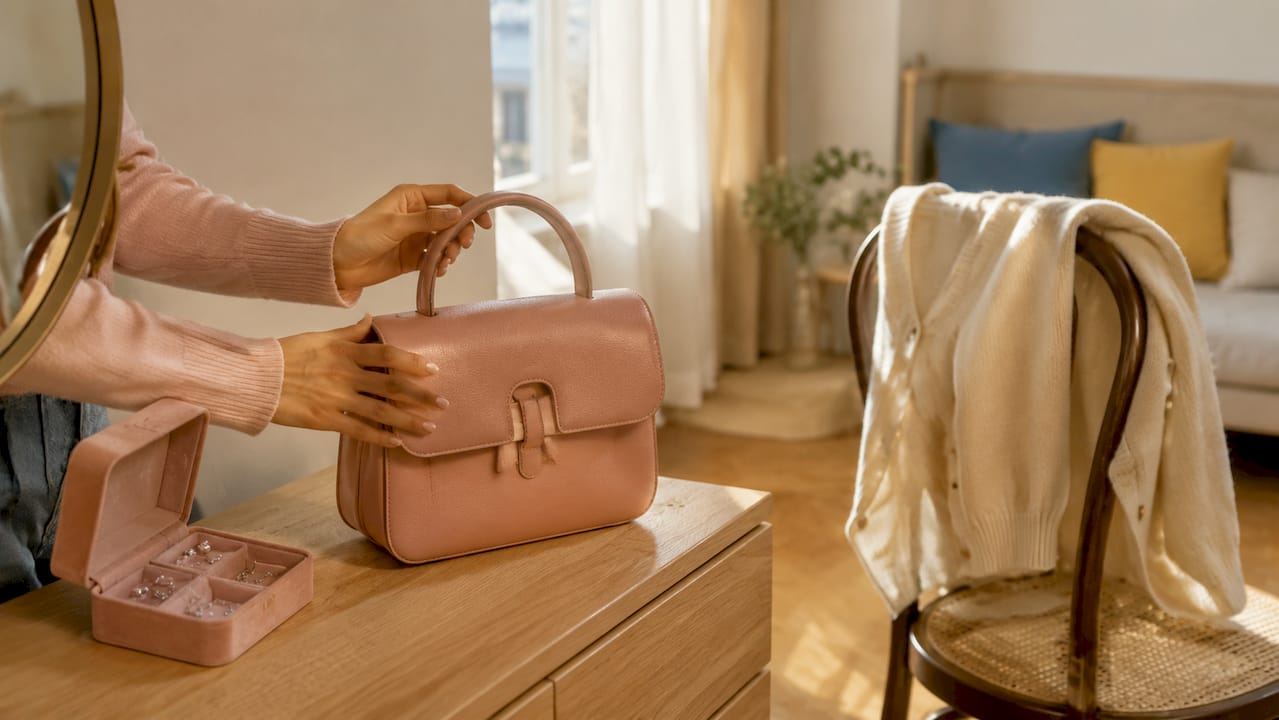
Color, texture, and shine each carry their own formality signals. Matte leather reads more formal than canvas. Gold hardware reads more ceremonial than silver in warm-toned looks. A satin evening bag elevates a gown in a way that a woven tote never could. These are not arbitrary rules. They are visual cues your audience reads instantly, often without realizing it.
Consider this contrast: a woman wearing a classic black column dress with a structured patent leather clutch, pearl drop earrings, and pointed-toe heels projects unmistakable formal elegance. The same dress worn with a crossbody canvas bag, hoop earrings, and block-heeled sandals reads as smart casual at best. The dress did not change. The accessories rewrote the entire narrative.
- Choose closed-toe, polished shoes for formal events over open-toe or strappy sandals
- Opt for structured bags with minimal hardware over slouchy or oversized styles
- Match accessory finishes (matte, satin, metallic) to the formality level of the occasion
- Limit color contrast between accessories and outfit to maintain a cohesive, elevated tone
Pro Tip: If you are unsure whether an accessory fits the formality level, ask yourself whether it has a defined shape. Structured pieces almost always read as more formal than unstructured ones.
What are the best jewelry choices for different neckline styles?
Jewelry selection for formalwear is one of the most nuanced decisions in getting dressed for a special occasion, and neckline type is the single most important variable. The goal is always enhancement, not competition. A necklace that fights with a neckline creates visual clutter. One that complements it creates harmony and draws attention to your face.
Earrings deliver the greatest impact at black-tie events with minimal effort, according to Borsheims, one of the most respected names in fine jewelry retail. This is especially true for high-neck and halter necklines, where a statement necklace would crowd the collarbone and create visual noise. For those silhouettes, a pair of chandelier earrings or elegant drop earrings does the work beautifully.
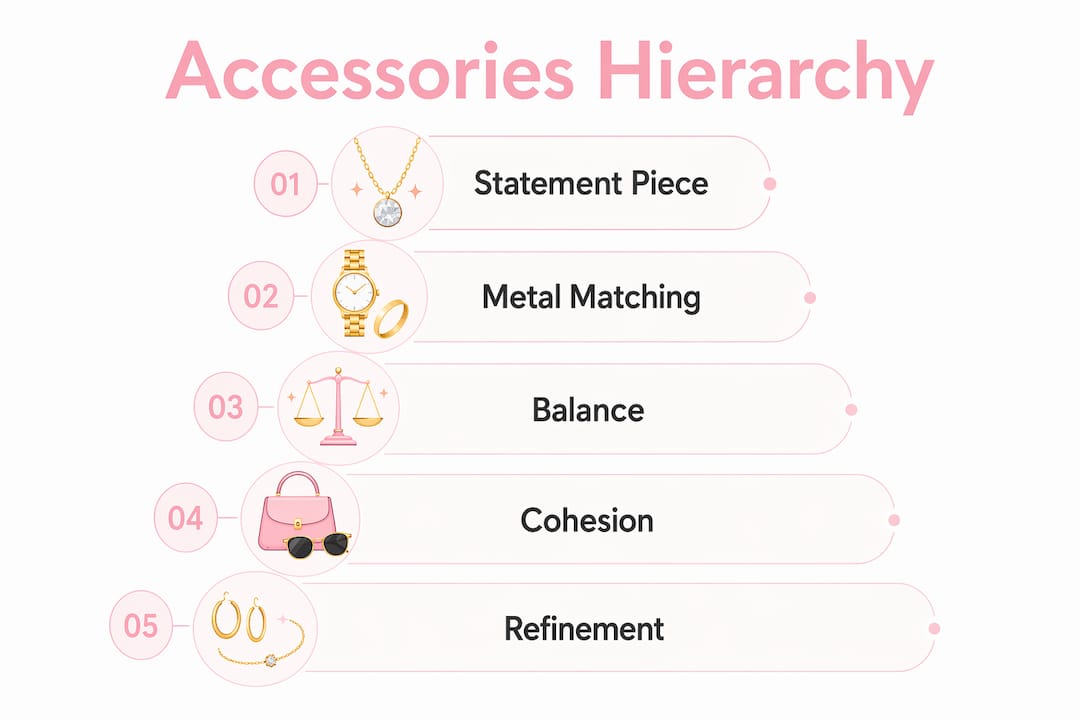
The table below maps the most common formal neckline types to their ideal jewelry pairings:
| Neckline style | Best jewelry choice | What to avoid |
|---|---|---|
| V-neck | Delicate pendant or Y-necklace | Chokers or wide collar necklaces |
| Sweetheart | Short statement necklace or collar chain | Long pendants that fall below the neckline |
| High neck / turtleneck | Statement earrings or bold cuff bracelet | Any necklace that competes with the neckline |
| Halter | Drop earrings, ear cuffs | Necklaces of any length |
| Off-shoulder | Ear studs or small hoops, layered bracelets | Oversized earrings that overpower the shoulder line |
| Strapless | Statement necklace or collar necklace | Earrings that compete with a bold necklace |
Cosmopolitan’s styling research confirms that minimalistic necklaces suit crew necks while delicate pendants work best with sweetheart necklines. The principle is proportion: the necklace should echo the neckline’s shape rather than contradict it.
Borsheims also recommends that black-tie jewelry prioritize cohesion by matching metal tones to dress fabrics. Gold jewelry paired with warm-toned or gold-accented gowns creates fluidity. White metals paired with silver or cool-toned fabrics achieve the same effect. Mixing metal tones without intention creates a fractured look that reads as unplanned rather than curated.
Pro Tip: For formal occasions, choose one statement jewelry piece and let everything else support it quietly. If your earrings are the focal point, keep your necklace minimal and your bracelet understated. Restraint is its own form of sophistication.
You can explore fashion-forward jewelry ideas to find pieces that balance current trends with timeless formal appeal.
How do accessories affect social perception and leadership signaling?
The psychological impact of formal accessories is not a matter of opinion. It is documented in research. A study from the Technical University of Munich found that formal attire with standout accessories attracts greater visual attention and leads to faster ascription of leadership qualities. This means the accessories you wear to a formal event are actively shaping how others perceive your authority and competence, often within seconds of entering a room.
“Visual cues from formal clothing and accessories significantly influence rapid judgments about social roles such as leadership and professionalism.” — Technical University of Munich
This finding carries real weight for women attending business formal events, galas, or any occasion where first impressions matter. Accessories are not just aesthetic choices. They are non-verbal communication tools. A structured handbag, a polished watch, or a refined pair of earrings each contribute to the overall signal your presence sends. Accessories shape social inference by adding visual distinctiveness to formal attire, reinforcing the impression of intentionality and confidence.
The practical implication is this: when you dress for a formal occasion with carefully chosen accessories, you are not just dressing for yourself. You are managing the impression others form of you in real time. For women in leadership roles or professional settings, understanding this dynamic transforms accessorizing from a style exercise into a strategic one. The role of accessories in your professional image is measurable, not just aesthetic.
What practical tips help women accessorize formal outfits with elegance?
Elegant accessorizing follows a clear logic: one primary focal point, supported by a few carefully chosen pieces that reinforce rather than compete. A few well-proportioned pieces suggest confidence and intention, while over-accessorizing creates visual clutter that distracts from the outfit and the wearer. Here is a practical framework for getting it right every time.
-
Identify your focal point first. Decide whether your earrings, necklace, or bag will be the statement piece before you choose anything else. Every other accessory should play a supporting role. If your gown has intricate beading at the neckline, let the dress speak and choose minimal jewelry.
-
Match metal tones with intention. Gold, rose gold, and silver each carry different visual temperatures. Warm-toned outfits in ivory, champagne, or blush pair naturally with gold. Cool-toned outfits in navy, black, or silver gray work beautifully with white metals. Mixing is possible, but it requires a deliberate layering strategy rather than a random combination.
-
Let your bag reinforce the formality level. A structured minaudière or satin clutch signals black-tie readiness. A polished leather top-handle bag works for business formal and cocktail events. The bag’s silhouette matters as much as its color or material.
-
Coordinate with your dress’s texture and embellishment. A heavily embellished gown calls for minimal accessories. A clean, simple silhouette in crepe or silk invites more expressive jewelry. The fabric and detailing of your dress are your starting point, not an afterthought.
-
Use shoes to anchor the look. Pointed-toe heels in a neutral or complementary tone create a polished, elongated line. Avoid shoes that introduce a competing color or casual silhouette. The shoe is the foundation of your formal look’s visual structure.
For a deeper look at how to build complete formal looks around these principles, the effortless elegance outfit formulas guide offers stylist-approved pairings for weddings, galas, and black-tie events.
Pro Tip: Before leaving the house, remove one accessory. This is the classic stylist’s rule, and it works. What remains will almost always feel more intentional and refined than the full original combination.
Modest and refined jewelry choices, like those explored by CAIRO Jewellery, offer another lens for selecting pieces that carry meaning and sophistication without excess.
Key takeaways
The most effective approach to accessorizing formal outfits is to choose one statement piece, match metals and textures to the garment, and let structure signal formality.
| Point | Details |
|---|---|
| Accessories define outfit tone | Structured, polished pieces elevate formality; unstructured ones soften or casualize the look. |
| Neckline drives jewelry choice | Match necklace length and earring scale to your neckline type for visual harmony. |
| Accessories signal leadership | Research shows formal attire with distinctive accessories accelerates leadership perception in social settings. |
| One focal point, supporting cast | Choose one statement piece and keep remaining accessories understated for a polished result. |
| Metal and texture cohesion | Match accessory metal tones to dress fabric undertones for a fluid, intentional appearance. |
Why accessories are the most underestimated tool in your formal wardrobe
I have spent years observing how women dress for formal occasions, and the pattern is consistent: most women invest heavily in the dress and treat accessories as an afterthought. The result is a look that is technically correct but emotionally flat. The dress does its job, but nothing in the ensemble commands attention or communicates personality.
The women who consistently look extraordinary at formal events share one habit: they build outfits from the accessories outward, not the other way around. They decide on a pair of earrings or a bag first, then find a dress that honors that choice. This reversal sounds counterintuitive, but it produces looks with a coherence that is immediately visible. The accessories and the garment feel like they were made for each other, because in a sense, they were.
What I find most compelling about the research from the Technical University of Munich is that it validates something stylists have known intuitively for decades. The accessories you wear do not just complete your look. They shape how others read your presence, your authority, and your confidence. That is not a small thing. That is the entire point of dressing with intention.
My honest advice: stop treating accessories as optional finishing touches. Treat them as the primary language of your formal look. Choose them with the same care you give to the dress itself, and you will find that the whole experience of getting dressed for a special occasion becomes more satisfying, more personal, and far more powerful.
— John
Discover curated accessories for your formal wardrobe at Thechiccollectionco
Thechiccollectionco curates accessories designed to complement formal outfits with the kind of polish and intention this article describes. Whether you are searching for a structured bag to anchor a gala look or a jewelry set that coordinates beautifully with your neckline, the collection brings together timeless and trend-aware pieces at accessible prices.
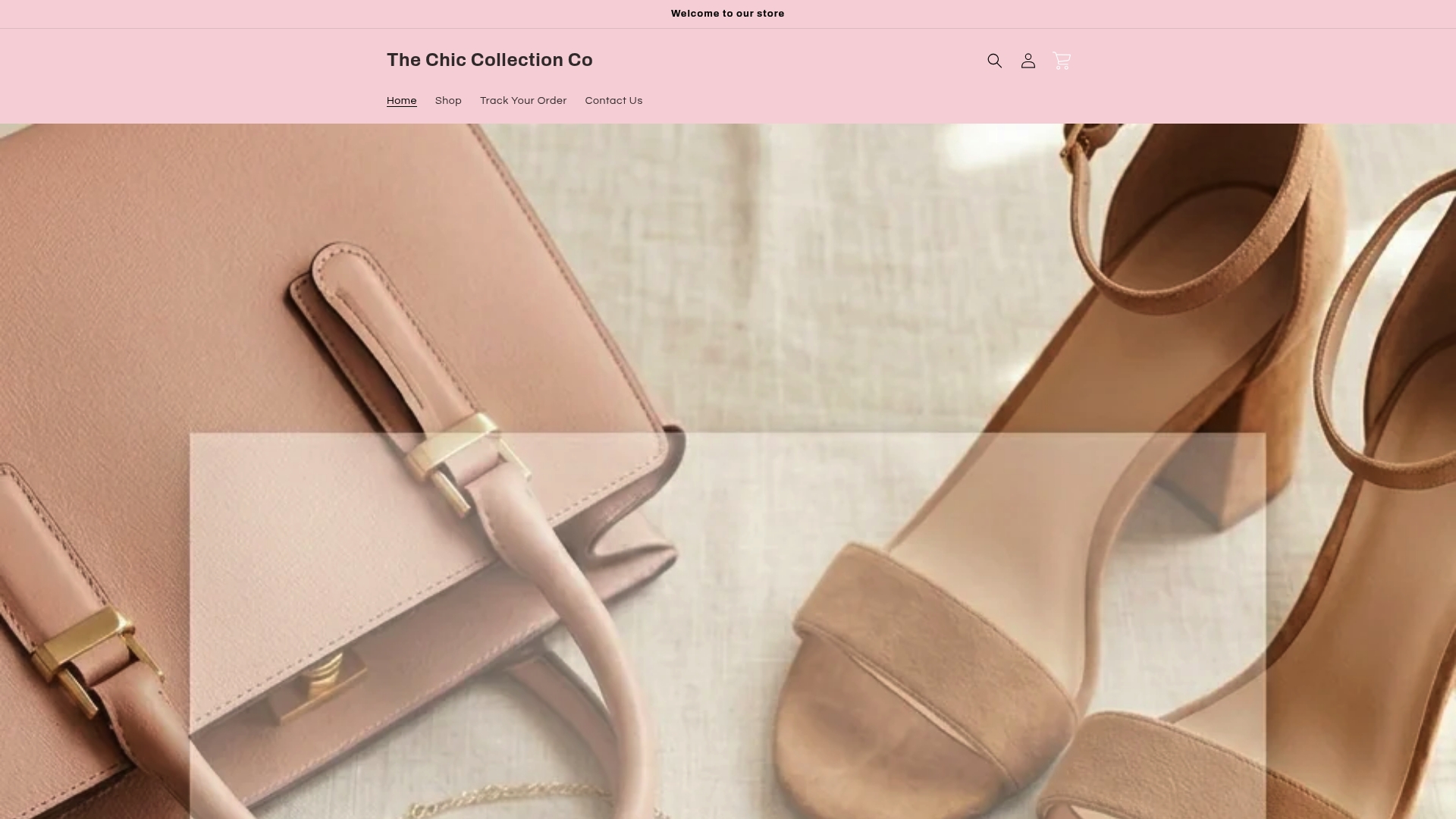
The heart-shape leather handbag offers structured elegance in a compact silhouette, ideal for cocktail events and formal evenings. The opal and emerald jewelry set pairs a pendant necklace with matching stud earrings, making neckline coordination effortless. Keep your pieces radiant with the jewelry cleaning kit, which includes a cleaner solution and polishing cloths for lasting brilliance. Every order ships free, backed by a money-back guarantee and 24/7 support.
FAQ
What is the role of accessories in formal outfits?
Accessories define the tone, formality level, and visual balance of a formal outfit. They direct the viewer’s eye, signal style intent, and complete the look in ways the garment alone cannot achieve.
What accessories work best for black-tie events?
Statement earrings deliver the greatest impact at black-tie events, according to Borsheims. Pair them with a structured clutch and ensure metal tones match your dress fabric for a cohesive, polished result.
How do I choose jewelry for a high-neck formal dress?
High-neck and halter necklines call for statement earrings or bold cuff bracelets rather than necklaces. Adding a necklace to a high neckline creates visual crowding and competes with the garment’s structure.
Can accessories really affect how others perceive me at formal events?
Yes. Research from the Technical University of Munich shows that formal attire with distinctive accessories leads to faster and stronger leadership status ascription. Accessories actively shape social perception before you speak.
How many accessories should I wear to a formal occasion?
Choose one statement piece and two to three supporting accessories. A few well-proportioned pieces read as confident and intentional, while layering too many creates visual noise that distracts from your overall look.
Recommended
- The Role of Accessories in Your Professional Image – The Chic Collection Co
- Why Accessories Define an Outfit: Your 2026 Style Guide – The Chic Collection Co
- Effortless Elegance Outfit Formulas for Special Occasions – The Chic Collection Co
- Types of Elegant Office Attire for Women in 2026 – The Chic Collection Co