
Accessories are the finishing layer that transforms clothing into a personal statement, and understanding why accessories define an outfit is the difference between looking dressed and looking intentional. A silk blouse and tailored trousers read entirely differently when paired with a structured leather bag and gold earrings versus a canvas tote and rubber slides. The clothing provides the canvas, but accessories set the tone, communicate your mood, and signal your occasion. Jewelry, handbags, shoes, hair pieces, and belts each carry visual weight that shapes how every silhouette is perceived. This guide breaks down exactly how each category works and how to use them with confidence.
Why accessories define an outfit more than the clothes themselves
Accessories function as the finishing layer of an outfit, changing how the same clothing is interpreted by directing attention to the face, waist, or hands. That redirection is not subtle. It shifts the entire read of a look from polished to playful, from dramatic to relaxed, without a single change to the base garment. This is the core reason why accessories matter far beyond decoration.
Think about a classic black dress. Worn with a pearl necklace, pointed-toe heels, and a structured clutch, it reads formal and refined. Swap those for chunky sneakers, a crossbody bag, and layered chain necklaces, and the same dress reads street-style cool. The dress did nothing. The accessories did everything. This is what styling professionals mean when they say swapping just one to three accessory categories creates a completely different occasion-appropriate vibe.
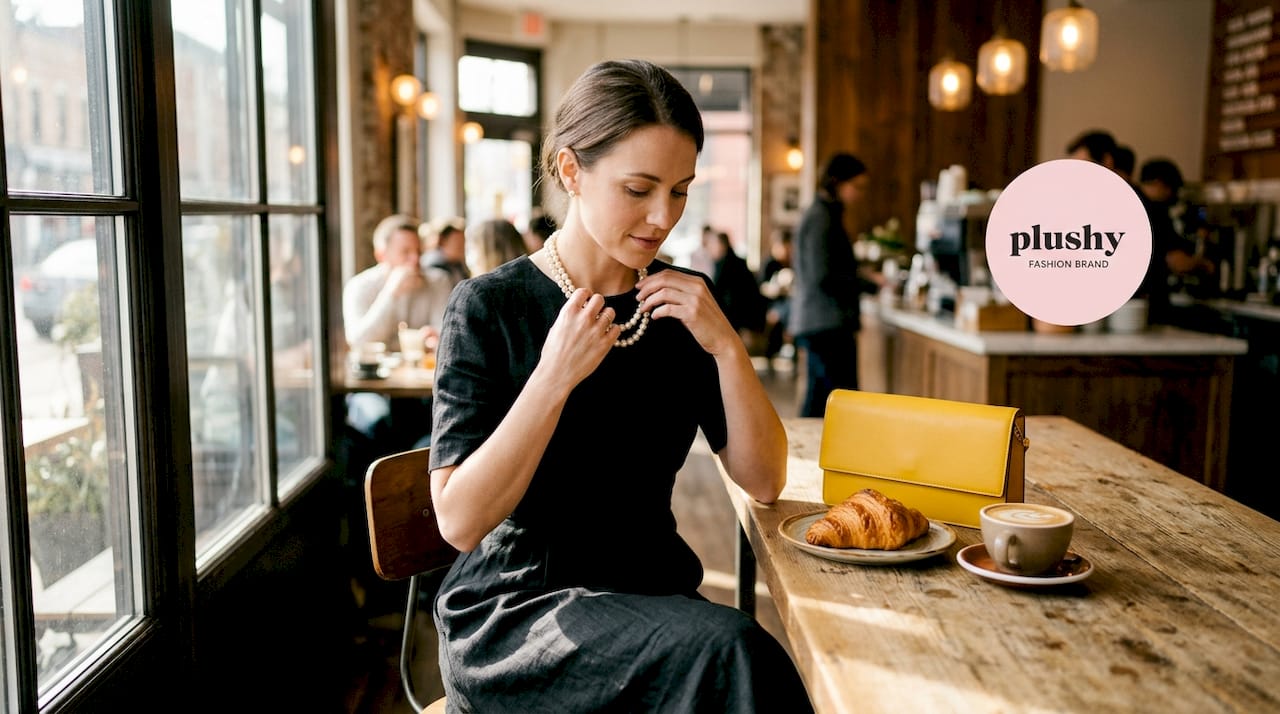
Accessories also create contrast, shape proportions, and communicate formality without a single word. Clean lines and refined materials signal a formal setting. Casual textures and relaxed silhouettes soften the look and invite approachability. Your accessories are speaking before you do.
Beyond formality, polished accessories send subtle status signals that communicate intention and elevate impressions. A refined bag or a well-chosen jewelry piece functions as a quiet visual cue, telling the room that you arrived with purpose. That cumulative effect is what separates a thoughtful outfit from one that simply covers the body.
How color and texture work together
Color choice in accessories acts as a rapid visual cue. A single bold color draws the eye immediately and creates a focal point that anchors the entire look. Texture works alongside color to alter formality. Matte leather reads more casual than patent. Hammered gold reads more artisan than polished silver. Understanding both variables gives you precise control over how your outfit lands in any setting.
- Bold color accessories create a single focal point and prevent visual confusion
- Neutral accessories (black, nude, white, metallics) support any base garment without competing
- Matte textures soften and relax; glossy or metallic finishes add formality and drama
- Mixed textures (suede bag with silk scarf) add depth without adding visual noise
Pro Tip: When you are unsure about color, choose one accessory in a statement shade and keep every other piece in a neutral. This is the fastest way to look intentional without overthinking.
What role do accessories play in expressing your individuality?
The modern fashion shift sees accessories as expressions of individuality rather than mere complements to clothing. In 2026, that shift has accelerated. Accessories are no longer finishing touches. They are the point. Statement belts, silk scarves, and personalized charm jewelry are defining outfits rather than completing them. This is a meaningful distinction for anyone preparing for a special occasion.
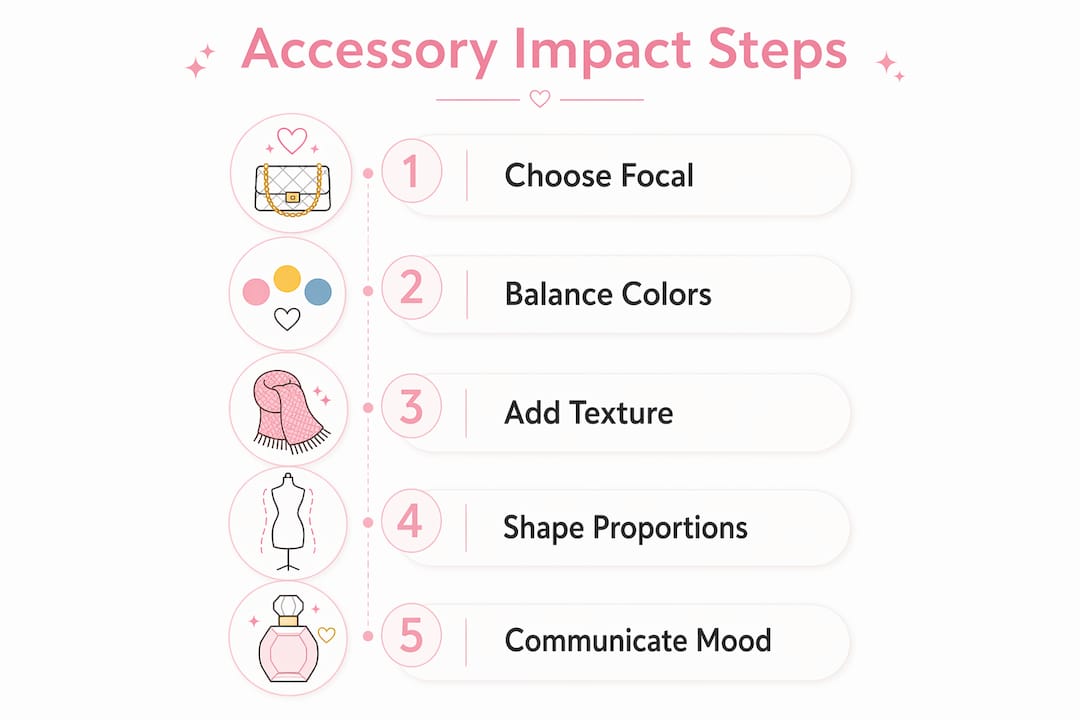
Choosing accessories that reflect your personal identity requires intention, not volume. Here is a practical framework for building a signature accessory style:
- Identify your focal piece. Choose one item that genuinely reflects your personality, whether that is a bold cocktail ring, a sculptural earring, or a printed scarf. This piece sets the direction for everything else.
- Let supporting pieces echo, not compete. If your focal piece is a colorful silk scarf, your bag and shoes should stay in the same color family or a clean neutral. Supporting pieces should whisper, not shout.
- Consider the occasion’s formality. A statement belt works beautifully at a garden party. The same belt at a black-tie dinner competes with the gown. Match the weight of your accessories to the weight of the event.
- Rotate your signature piece weekly. Styling insiders recommend rotating your focal accessory to maintain balance and keep your look fresh without rebuilding your wardrobe.
- Invest in timeless pieces that carry personal meaning. A piece of fashion-forward jewelry you genuinely love will always read more confident than a trend piece worn without conviction.
Balancing uniqueness with cohesion is the real skill. Your accessories should feel like a curated collection, not a random assortment. When every piece has a reason for being there, the outfit feels intentional and the wearer looks self-assured.
Which accessories have the most impact for special occasions?
For special occasions, three categories carry the most visual weight: shoes, handbags, and jewelry. Each one operates on a different part of the silhouette and serves a distinct styling function.
| Accessory Category | Impact on the Outfit | Best Practice for Special Occasions |
|---|---|---|
| Shoes | Anchor the silhouette and set formality level | Match heel height to venue; pointed toe adds length |
| Handbag | Frames the torso and signals occasion | Choose structured over slouchy for formal events |
| Jewelry | Draws attention to the face, neck, and hands | One statement piece with minimal supporting items |
| Hair accessories | Frames the face and completes the silhouette | Barrettes, headbands, and scarves for quick polish |
| Belt | Defines the waist and creates proportion | Use to add structure to flowing or oversized silhouettes |
Hair accessories deserve particular attention because they are consistently underestimated. Adding one well-chosen hair accessory can upgrade a simple outfit in about ten seconds. A velvet barrette, a silk headband, or a jeweled pin creates a pulled-together look without requiring a salon appointment. For spring and summer 2026, statement hair pieces are among the most accessible and affordable ways to shift an outfit’s energy.
Event dressing professionals consistently apply one principle: select one focal accessory and build supporting items around it. This approach achieves balance and intentionality without requiring a large collection. The focal piece earns the attention. Everything else earns its place by supporting that focal piece quietly.
The most common mistake in special occasion dressing is over-accessorizing. Competing focal points create visual confusion and dilute the impact of each individual piece. Two statement necklaces, bold earrings, a printed scarf, and a colorful bag worn simultaneously cancel each other out. The result reads cluttered rather than curated.
Pro Tip: Before leaving the house, test each accessory one at a time and step back to assess the balance. If removing one piece makes the outfit look cleaner, remove it.
How to apply the one-accessory color rule for a balanced look
The one-accessory color rule is a practical application of color theory: a single well-chosen colorful accessory gives a clear focal point, reduces visual confusion, and enhances outfit cohesion. Multiple competing colors fragment the viewer’s attention and make an outfit feel busy rather than bold.
The rule works because the human eye naturally seeks a resting point. When you give it one clear focal color, the entire outfit feels resolved. When you give it three, the eye keeps moving and the look feels unsettled.
Here is how to apply the rule with precision:
- Start with a neutral base. Black, white, navy, camel, and gray are the most versatile foundations. They allow any accessory color to read clearly without interference.
- Choose one color pop. A cobalt blue bag, a red heel, or an emerald pendant necklace. One. Not two.
- Repeat the color subtly if needed. A small echo of the focal color elsewhere (a thin belt, a nail color) creates cohesion without adding a second competing focal point.
- Place the color where you want attention. A colorful necklace draws the eye to your face. A colorful shoe draws the eye downward and creates the illusion of longer legs. A colorful bag draws the eye to the torso.
| Placement | Visual Effect | Best For |
|---|---|---|
| Necklace or earrings | Draws attention to the face | Portraits, conversations, formal dinners |
| Belt | Emphasizes the waist | Creating proportion in flowing silhouettes |
| Shoes | Grounds the look, lengthens the leg | Casual events, garden parties |
| Bag | Frames the torso | All occasions; easiest swap for outfit refresh |
Understanding timeless versus trendy fashion helps you decide whether your color pop should be a classic investment or a seasonal experiment. A cobalt bag you love for years is worth more than a neon trend piece worn twice.
Key takeaways
Accessories define an outfit by controlling focal points, communicating formality, and expressing individuality. The most impactful approach is to choose one statement piece and let every other accessory support it.
| Point | Details |
|---|---|
| Accessories set the outfit’s tone | The same clothing reads formal, casual, or dramatic based entirely on accessory choices. |
| One focal piece is the rule | Choose one statement accessory and keep all others in a supporting, neutral role. |
| Color placement controls attention | Position your color pop where you want the viewer’s eye to land on your silhouette. |
| Hair accessories are underused | A single barrette or headband can complete a special occasion look in seconds. |
| Small swaps create big shifts | Changing one to three accessory categories transforms the occasion-appropriateness of any outfit. |
Why I think most women are one accessory away from their best look
After years of observing how women dress for special occasions, the pattern I see most often is not under-dressing. It is under-accessorizing with intention. Most women own beautiful pieces. The challenge is that those pieces sit in a drawer because choosing feels overwhelming, and the default is to wear nothing or wear everything at once.
The truth I have come to believe is that small accessory changes build cumulatively, adding depth and changing an outfit’s perceived quality in ways that feel almost invisible but register immediately to everyone in the room. You do not need a new wardrobe. You need to pick one piece that genuinely excites you and wear it with conviction.
The women I have seen look most radiant at events are rarely the ones wearing the most. They are the ones wearing the right thing. A single opal pendant against a simple gown. A structured bag that makes a casual blazer look considered. A silk scarf tied at the wrist that turns a plain dress into something personal. These are not expensive choices. They are intentional ones.
My advice: stop treating accessories as an afterthought and start treating them as your first decision. Choose your focal piece before you choose your outfit. Build outward from there. You will be surprised how quickly the rest falls into place, and how much more confident you feel when your accessories are working with you rather than sitting unused.
— John
Discover curated accessories that define your look ✨
At Thechiccollectionco, every piece in the collection is chosen to help you dress with intention, not just occasion. Whether you are preparing for a wedding, a gala, or a dinner that deserves your most polished self, the right accessory makes the difference between an outfit and a statement. Start with a focal piece that speaks to you. The opal and emerald jewelry set pairs a pendant necklace with matching stud earrings for an effortlessly cohesive look. The heart-shaped leather crossbody bag adds personality and structure to any silhouette. Free delivery on every order, backed by a money-back guarantee.
FAQ
Why do accessories define an outfit more than clothing?
Accessories control focal points, formality signals, and color direction in ways that clothing alone cannot. The same garment reads entirely differently depending on the bag, shoes, and jewelry chosen to accompany it.
What is the one-accessory color rule?
The one-accessory color rule means choosing a single colorful piece to anchor the outfit’s focal point, keeping all other accessories in neutral tones. This prevents visual confusion and makes the look feel cohesive and intentional.
How many accessories should you wear to a special occasion?
Styling professionals recommend one focal statement piece supported by two to three minimal, neutral accessories. Over-accessorizing creates competing focal points that dilute the impact of each individual piece.
Which accessory has the biggest impact on an outfit?
Shoes and handbags carry the most structural weight, but jewelry draws the eye to the face and communicates occasion most directly. For special events, a statement necklace or earring set is often the single most transformative choice.
How do hair accessories change an outfit?
A well-chosen hair accessory such as a barrette, headband, or silk scarf frames the face and creates a pulled-together look almost instantly. Spring 2026 styling places hair accessories among the most accessible ways to shift an outfit’s energy without changing any other element.
Recommended
- The Role of Accessories in Your Professional Image – The Chic Collection Co
- What Is Fashion Forward Jewelry? Your 2026 Style Guide – The Chic Collection Co
- Types of Elegant Office Attire for Women in 2026 – The Chic Collection Co
- Fashion Investment Pieces Explained for the Modern Woman – The Chic Collection Co