
Classic wardrobe pieces are defined as garments with timeless silhouettes, superior craftsmanship, and neutral aesthetics that remain stylish across decades without dependence on seasonal trends. Understanding why classic pieces matter in your wardrobe goes far beyond nostalgia. A white button-down shirt, a tailored trench coat, or a well-cut blazer each carry a cost-per-wear value that disposable fast fashion simply cannot match. These pieces form the foundation of what the fashion industry calls a capsule wardrobe: a curated, modular collection built for maximum versatility and minimum waste. The benefits of timeless fashion are economic, environmental, and deeply personal.
Why classic pieces matter for your wardrobe versatility
The most powerful argument for building your wardrobe around classic pieces is pure versatility. A curated collection of timeless garments creates a modular, mix-and-match capsule wardrobe that multiplies your outfit options without multiplying your closet. Clean lines and neutral tones allow every piece to work with the next, so a single tailored blazer can move from a boardroom presentation to a weekend brunch with nothing more than a swap of footwear.
Consider how three foundational pieces interact:
- White button-down shirt: Worn tucked into straight-leg jeans for casual polish, layered under a blazer for professional settings, or knotted at the waist over a midi skirt for weekend ease.
- Tailored trench coat: Belted over a slip dress for evening, thrown over athleisure for a sharp contrast, or paired with wide-leg trousers for a refined daytime look.
- Straight-leg dark denim: Dressed up with a silk blouse and heels, dressed down with a striped tee and loafers, or styled with a cashmere sweater for effortless autumn dressing.
The psychological benefit here is real. Classic wardrobes eliminate daily outfit decision fatigue, saving cognitive energy for tasks that genuinely demand your attention. Decision fatigue is not a minor inconvenience. Research in behavioral psychology confirms that the quality of decisions deteriorates after a long sequence of choices, which means your morning wardrobe chaos has a measurable cost on your day.
Pro Tip: Build your capsule around three neutral anchors: ivory or white, navy or black, and camel or tan. Every piece you add should connect to at least two of those anchors.
What are the real economic and environmental benefits?
Investing in classic pieces is one of the most financially sound decisions you can make as a woman who cares about her wardrobe. The concept of cost-per-wear is the clearest lens for this: an investment piece is defined by its cost-per-wear dropping below that of a cheaper alternative within one year and continuing to decline with every subsequent use. A $200 cashmere sweater worn 80 times costs $2.50 per wear. A $40 fast-fashion version worn 10 times before pilling costs $4.00 per wear. The math rewards quality every time.
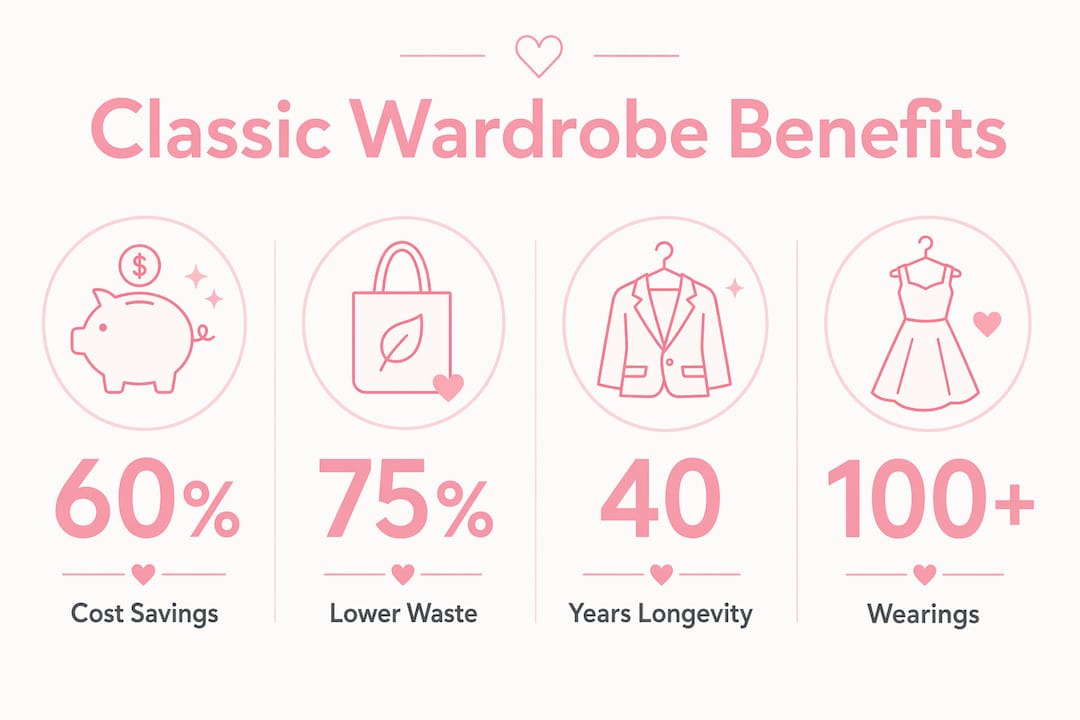
The environmental case is equally compelling. Extending a garment’s lifespan by just nine months reduces its combined carbon, water, and waste footprint by 20% to 30%. That reduction is significant. It means that choosing one well-made trench coat over three disposable versions across a decade is a genuine act of environmental responsibility, not just a style preference.
| Comparison | Fast fashion item | Classic investment piece |
|---|---|---|
| Average price | $35 | $180 |
| Average wears before discard | 7 to 10 | 80 to 150+ |
| Cost per wear | $3.50 to $5.00 | $1.20 to $2.25 |
| Environmental lifespan impact | High footprint, short life | 20% to 30% lower footprint |
“The true price of a garment is never on the tag. It is calculated across every morning you reach for it with confidence.”
Pro Tip: Before any purchase, divide the price by the number of times you realistically expect to wear it in one year. If the number is above $5, reconsider. If it is below $2, you have found a genuine investment.
How design and craftsmanship define longevity
The physical construction of a classic piece is what separates it from a trend-driven garment at the molecular level. Natural fibers like wool, silk, and cashmere provide breathability, odor resistance, and graceful aging that synthetic fibers cannot replicate. A wool blazer softens and molds to your body over years of wear. A cotton Oxford shirt becomes more supple with every wash. These materials do not just survive time. They improve with it.
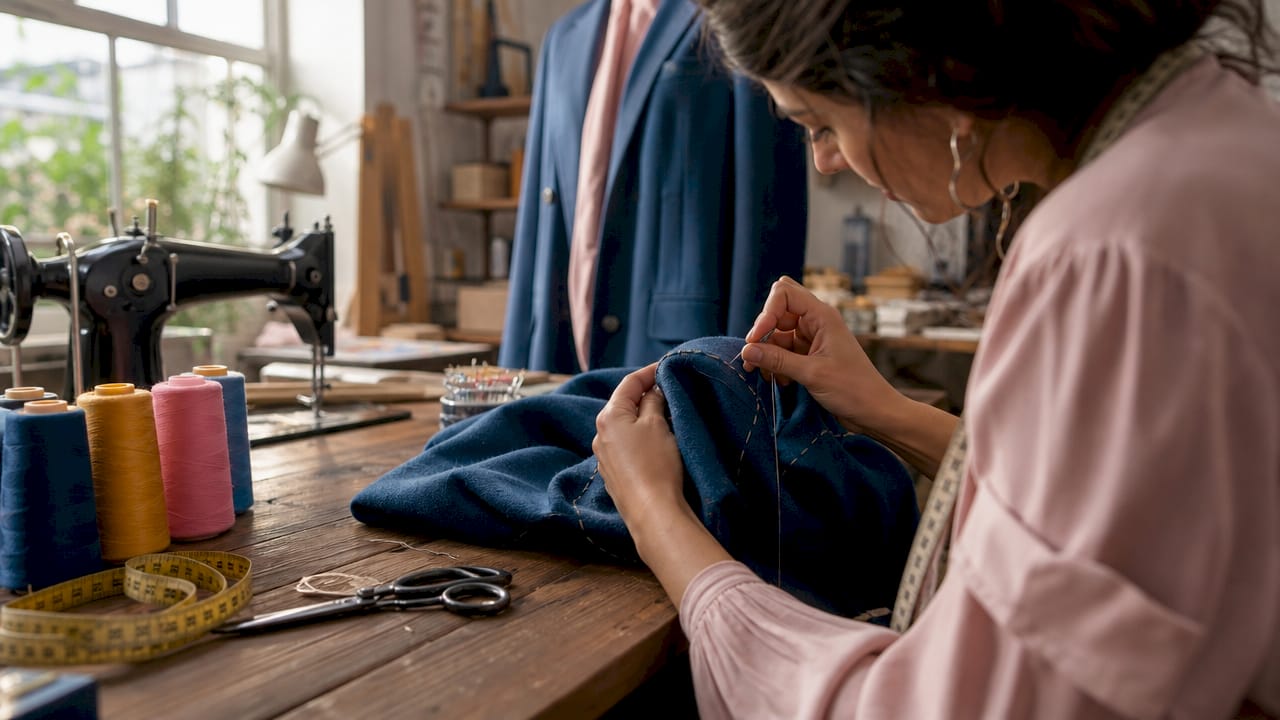
Manufacturing techniques matter just as much as materials. Classic garments use bound seams and generous seam allowances, which means the garment can be altered, let out, or taken in without compromising its structure. This is the detail that separates a $300 blazer from a $60 one. The expensive version is built to be tailored. The cheap version is built to be discarded.
Four construction markers that signal a genuinely durable piece:
- Bound or French seams on the interior, which prevent fraying and extend the garment’s structural life.
- Generous seam allowances of at least 5/8 inch, allowing for professional alterations as your body or preferences change.
- Fully fashioned knitwear, where each panel is shaped on the loom rather than cut from a flat sheet, producing a fit that holds its shape wash after wash.
- Natural fiber content above 80%, which signals breathability, durability, and the graceful aging that synthetic blends cannot achieve.
“Restraint in design is not a limitation. It is the signature of a garment built to outlast the season it was made in.”
Fit and tailoring in women’s fashion are the final layer of longevity. A classic piece cut to honor natural body proportions flatters across weight fluctuations and style evolutions. That adaptability is precisely why the trench coat, the A-line skirt, and the straight-leg trouser have remained wardrobe staples for over half a century.
Classic pieces vs. trendy fashion: what actually wins?
The comparison between classic wardrobe investment and trend-driven purchasing is not simply a matter of taste. It is a question of identity and financial clarity. Trend-driven purchases often reflect what the industry calls “identity buying,” which is the impulse to purchase a garment not because it serves your life but because it signals belonging to a cultural moment. That impulse is expensive and short-lived.
Classic pieces project self-confidence and sophistication by prioritizing style rooted in restraint and natural body proportions. This communicates internal security rather than a need for external validation. The woman in a perfectly fitted ivory blazer and straight-leg trousers reads as composed and intentional. The woman in last season’s micro-trend reads as reactive.
The practical drawbacks of trend-chasing are worth naming directly:
- Rapid obsolescence: A micro-trend item purchased in spring may feel unwearable by autumn of the same year, collapsing its cost-per-wear value.
- Aesthetic insecurity: Constantly updating your wardrobe to match trends creates a cycle of dissatisfaction, where nothing you own ever feels quite right.
- Wardrobe fragmentation: Trend pieces rarely coordinate with each other, producing a closet full of clothes and nothing to wear.
- Financial drain: The cumulative cost of trend purchases across a year frequently exceeds the cost of three or four well-chosen investment pieces.
For a deeper look at how these two approaches play out in practice, the guide on timeless vs. trendy fashion at Thechiccollectionco offers a clear framework for making the distinction in your own closet.
How to build a personalized classic wardrobe step by step
Building a classic wardrobe is a practice of patience and self-knowledge. A slow, sequenced approach prevents identity buying and ensures maximum utility from every piece you add. The goal is not to overhaul your closet overnight. It is to build a foundation so strong that every morning becomes effortless.
Start with the hanger test. This method asks you to turn all hangers backward in your closet, then flip each one forward only when you wear that item. After 30 days, the hangers still facing backward reveal the pieces that are not earning their space. Those are the items to release, not replace with more trends.
Follow this sequence to build your foundation:
- Identify your three most-worn silhouettes. Whether you reach for straight-leg trousers, A-line skirts, or tailored dresses, your repeat-wear patterns reveal your true style identity.
- Invest in the white button-down shirt first. It is the single most versatile garment in a classic wardrobe, functioning across casual, professional, and formal contexts.
- Add a tailored blazer in a neutral tone. Camel, navy, or charcoal each work across seasons and occasions without requiring a matching set.
- Choose straight-leg jeans in dark indigo. This cut flatters the widest range of body types and transitions from day to evening with minimal effort.
- Incorporate timeless accessories last. A pearl necklace, a structured leather handbag, or a silk scarf each elevate both casual and formal looks without demanding a wardrobe overhaul.
Pro Tip: Your classic wardrobe must be personalized to your lifestyle, not a fashion editor’s. If you work from home, a tailored blazer matters less than a refined cashmere crewneck. Build for your actual life, not an aspirational one.
A wardrobe built on a budget does not require luxury price tags. It requires intentional selection, a clear understanding of your wear patterns, and the discipline to wait for the right piece rather than settling for a convenient one.
Key takeaways
Classic wardrobe pieces deliver lasting value through superior craftsmanship, cost-per-wear efficiency, and timeless versatility that trend-driven fashion cannot replicate.
| Point | Details |
|---|---|
| Versatility multiplies outfits | Neutral classics mix and match to create dozens of looks from a small collection. |
| Cost-per-wear rewards quality | A $180 classic piece worn 100 times costs less per wear than a $35 fast-fashion item worn 10 times. |
| Craftsmanship determines lifespan | Bound seams, natural fibers, and generous seam allowances distinguish durable classics from disposable garments. |
| Environmental impact is real | Extending a garment’s life by nine months cuts its carbon, water, and waste footprint by 20% to 30%. |
| Build slowly and intentionally | Use the hanger test and a sequenced purchase approach to avoid identity buying and maximize utility. |
Why I believe classic pieces are the most empowering wardrobe choice
I have spent years watching women transform their relationship with getting dressed, and the shift always begins the same way: they stop chasing and start choosing. The women who invest in a handful of well-made classics report something that goes beyond looking polished. They describe a kind of mental freedom. The morning no longer feels like a negotiation with a closet full of wrong answers.
What strikes me most is how classic fashion rejects homogenized trends and creates space for genuine personal expression. A neutral foundation does not erase your personality. It amplifies it, because the accessories, the fit, and the way you carry yourself become the statement rather than the garment itself.
The financial transformation is equally real. Women who commit to a cost-per-wear approach consistently report spending less annually on clothing while feeling better dressed every day. That is not a paradox. It is the natural result of buying fewer, better things.
Classic pieces are not about dressing conservatively or abandoning personal style. They are about building a wardrobe that works as hard as you do, one that serves every occasion, weathers every season, and grows more personal with every wear.
— John
Discover timeless pieces at Thechiccollectionco
Your classic wardrobe deserves a foundation built on pieces that are both beautiful and built to last. Thechiccollectionco curates a selection of shirts, handbags, and jewelry designed specifically for women who want versatile, elegant style without the luxury price tag.
From classic shirts that anchor every outfit to the structured crossbody handbag that completes a polished look, every piece is chosen for its ability to work across occasions and seasons. Add an opal and emerald jewelry set to bring quiet elegance to any silhouette. All orders ship free, and every purchase is backed by a money-back guarantee. Your most confident wardrobe starts here.
FAQ
What are classic wardrobe pieces?
Classic wardrobe pieces are garments with timeless silhouettes, neutral tones, and superior construction that remain stylish across multiple seasons and decades. Examples include the white button-down shirt, tailored blazer, trench coat, straight-leg trousers, and dark indigo jeans.
Why should I invest in classic pieces instead of trendy items?
Classic pieces deliver a lower cost-per-wear over time, reduce decision fatigue, and maintain their aesthetic relevance far longer than trend-driven garments. A well-made classic also carries environmental benefits, since extending garment life by nine months cuts its footprint by 20% to 30%.
What are the essentials for a capsule wardrobe?
The core essentials for a capsule wardrobe include a white button-down shirt, a tailored blazer, straight-leg trousers or dark jeans, a trench coat, and a versatile midi dress. Timeless accessories like a structured handbag and a pearl or gemstone necklace complete the foundation.
How do I know if a piece is truly a classic investment?
Apply the cost-per-wear test: divide the price by the realistic number of wears in one year. If the result is below $2 to $3 and the piece works across multiple contexts, it qualifies as a genuine investment. Check for natural fibers and bound seams as physical markers of durability.
How do I start building a classic wardrobe without overspending?
Use the hanger test to identify which pieces you already reach for repeatedly, then invest in upgrading those specific categories first. Build slowly, prioritize foundational visible pieces, and resist purchasing secondary items until your core silhouettes are covered.
Recommended
- Fashion Investment Pieces Explained for the Modern Woman – The Chic Collection Co
- Timeless vs Trendy Fashion: What You Need to Know – The Chic Collection Co
- Why Tailoring Matters in Women’s Fashion Today – The Chic Collection Co
- Build a Chic Wardrobe on Budget Without Sacrifice – The Chic Collection Co